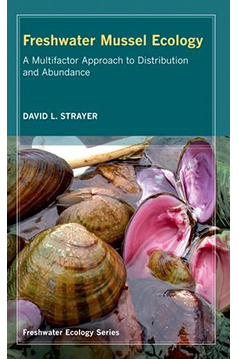
Dr. David L. Strayer

Freshwater Ecologist | PhD, 1984, Cornell University

Expertise
Hudson River, invasive species, streams

I am no longer doing new research, but continue to be modestly involved in freshwater ecology. Since retiring, I’ve helped to write several synthesis and review papers (e.g., Geist et al., 2022; Aldridge et al., 2023; Seebens et al., 2025; Dudgeon and Strayer, 2025; Strayer, 2025). Currently, I’m working as part of a team on a paper that critically reviews the composition, biogeography, and conservation of freshwater mussels (Unionida) in the Great Lakes-St. Lawrence basin. I’m also one of more than 100 authors of The Nature Record (https://naturerecord.org/), “the first holistic assessment of U.S. lands, waters, and wildlife, and the benefits they provide.”

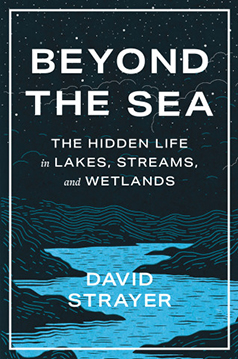
I continue to write and speak about ecology for the public (several dozen of my essays are collected here). I recently published a book for general audiences on the wonders of inland-water ecosystems and the remarkable life that they support: ("Beyond the Sea: The Hidden Life in Lakes, Streams, and Wetlands"). (“a wonderfully engaging exploration of the freshwater world, packed with fascinating stories, surprising facts and memorable anecdotes,” FBA News; “a captivating and insightful read,” ASLO Bulletin; “a clear, thought-provoking introduction to the hidden life of inland waters,” Conservation Biology; “a rallying cry to urgently see the beauty and significance of the freshwater environments,” The Geoscientist). I am about to finish a series of essays on extinctions in the world’s fresh waters, and the lessons that they can teach us about how to better manage these important ecosystems.

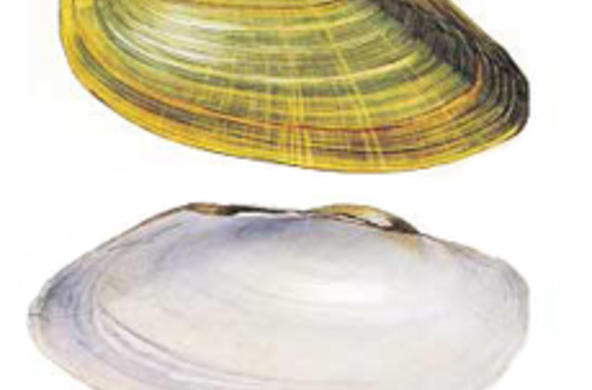
Finally, I’ve been working with academics and agency biologists on the management of Michigan’s freshwater mussels (an imperiled group of animals). I’ve helped to develop and run a test for mussel identification (now required of contractors who work on freshwater mussels). Joe Rathbun (a retired agency biologist) and I have been teaching a short class on mussel biology and identification.

Displaying 121 - 140 of 216
Ladd, J. W., R.E. Bell, E.A. Blair, H. Bokuniewicz, S.M. Carbotte, R.M. Cerrato, S. Chillrud, et al. 2002. “Mapping the Hudson Estuary’s Submerged Lands”. Clearwaters 32: 5-7.
Strayer, David L. 2001. “Ecology and Distribution of Hyporheic Microannelids (Oligochaeta, Aphanoneura, and Polychaeta) from the Eastern United States”. Arch. Hydrobiol. 151: 493-510.
Levin, L., D.F. Boesch, A.P. Covich, C.N. Dahm, C. Erséus, K.C. Ewel, R.T. Kneib, et al. 2001. “The Function of Marine Critical Transition Zones and the Importance of Sediment Biodiversity”. Ecosystems 4: 430-51.
Strayer, David L., and L. C. Smith. 2001. “The Zoobenthos of the Freshwater Tidal Hudson River and Its Response to the Zebra Mussel (Dreissena Polymorpha) Invasion”. Arch. Hydrobiol. Suppl. (Monographic Studies) 139: 1-52. http://www.caryinstitute.org/reprints/archiv_2001_hudson_benthos.pdf.
Strayer, David L. 2001. “Endangered Freshwater Invertebrates”. In S. A. Levin (ed.). Encyclopedia of Biodiversity, 2:425-39. Academic Press, Inc.
Strayer, David L., and W.D. Hummon. 2001. “Gastrotricha (2001)”. In J. H. Thorp and A. P. Covich (eds.). Ecology and Classification of Freshwater Invertebrates of North America. 2nd Edition, 181-94. Academic Press, Inc.
Limburg, K. E., D. P. Swaney, and David L. Strayer. 2001. “River Ecosystems”. In S. A. Levin (ed.). Encyclopedia of Biodiversity, Volume 5, 213-231+. Academic Press, Inc.
Strayer, David L. 2000. “North American Freshwater Invertebrates: A Research Priority”. In R. A. Abell, D. M. Olson, E. Dinerstein, P. T. Hurley, J. T. Diggs, W. Eichbaum, S. Walters, W. Wetengel, T. Allnutt, C. J. Loucks, and P. Hedao (eds.). Freshwater Ecoregions of North America: A Conservation Assessment, 104. Island Press.
Caraco, Nina F., Jonathan J. Cole, Stuart E. G. Findlay, David T. Fischer, G. G. Lampman, Michael L. Pace, and David L. Strayer. 2000. “Dissolved Oxygen Declines in the Hudson River Associated With the Invasion of the Zebra Mussel (Dreissena Polymorpha)”. Environ. Sci. Technol. 34: 1204-10. http://www.sgnis.org/publicat/est1204.htm.
Marangelo, P. J., and David L. Strayer. 2000. “The Freshwater Mussels of the Tonawanda Creek Basin in Western New York”. Walkerana 11: 97-106.
Strayer, David L., and L. C. Smith. 2000. “Macroinvertebrates of a Rocky Shore in the Freshwater Tidal Hudson River”. Estuaries 23: 359-66. http://www.sgnis.org/publicat/est359.htm.
Strayer, David L., and A.R. Fetterman. 1999. “Changes in the Distribution of Freshwater Mussels (Unionidae) in the Upper Susquehanna River Basin, 1955-1965 to 1996-1997”. Am. Midl. Nat. 142: 328-39.
Strayer, David L., and J. W. Reid. 1999. “Distribution of Hyporheic Cyclopoids (Crustacea:Copepoda) in the Eastern United States”. Arch. Hydrobiol. 145: 79-92.
Strayer, David L. 1999. “Effects of Alien Species on Freshwater Mollusks in North America”. J. N. Am. Benthol. Soc. 18: 74-98. http://www.sgnis.org/publicat/papers/jnamb74.pdf.
Strayer, David L. 1999. “Freshwater Mollusks and Water Quality (editorial)”. J. N. Am. Benthol. Soc. 18: 1.
Donley, S., L.C. Ferrington Jr., and David L. Strayer. 1999. “The Habitat of Paraboreochlus Larvae (Diptera: Chironomidae)”. J. Kansas Entomological Soc. 71: 501-4.
Strayer, David L. 1999. “Invasion of Fresh Waters by Saltwater Animals (comment)”. Trends Ecol. Evol. 14: 448-49.
Reid, J. W., David L. Strayer, J.V. McArthur, S.E. Stibbe, and J.J. Lewis. 1999. “Rheocyclops, a New Genus of Copepods from the Southeastern and Central United States (Crustacea: Cyclopoida: Cyclopidae)”. J. Crustac. Biol. 19: 384-96.
Strayer, David L. 1999. “The Statistical Power of Presence-Absence Data to Detect Population Declines”. Conserv. Biol. 13: 1034-38.
Strayer, David L., Nina F. Caraco, Jonathan J. Cole, Stuart E. G. Findlay, and Michael L. Pace. 1999. “Transformation of Freshwater Ecosystems by Bivalves: A Case Study of Zebra Mussels in the Hudson River”. BioScience 49: 19-27. http://sgnis.org/publicat/papers/b2_1.pdf.

Articles by David Strayer


Books