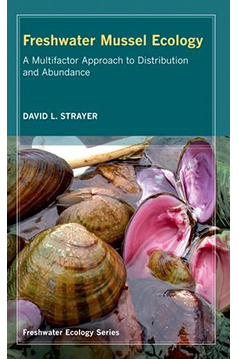
Dr. David L. Strayer

Freshwater Ecologist | PhD, 1984, Cornell University

Expertise
Hudson River, invasive species, streams

I am no longer doing new research, but continue to be modestly involved in freshwater ecology. Since retiring, I’ve helped to write several synthesis and review papers (e.g., Geist et al., 2022; Aldridge et al., 2023; Seebens et al., 2025; Dudgeon and Strayer, 2025; Strayer, 2025). Currently, I’m working as part of a team on a paper that critically reviews the composition, biogeography, and conservation of freshwater mussels (Unionida) in the Great Lakes-St. Lawrence basin. I’m also one of more than 100 authors of The Nature Record (https://naturerecord.org/), “the first holistic assessment of U.S. lands, waters, and wildlife, and the benefits they provide.”

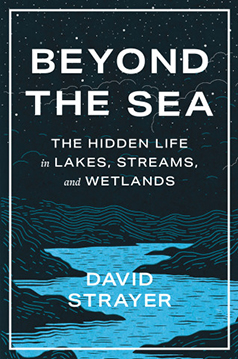
I continue to write and speak about ecology for the public (several dozen of my essays are collected here). I recently published a book for general audiences on the wonders of inland-water ecosystems and the remarkable life that they support: ("Beyond the Sea: The Hidden Life in Lakes, Streams, and Wetlands"). (“a wonderfully engaging exploration of the freshwater world, packed with fascinating stories, surprising facts and memorable anecdotes,” FBA News; “a captivating and insightful read,” ASLO Bulletin; “a clear, thought-provoking introduction to the hidden life of inland waters,” Conservation Biology; “a rallying cry to urgently see the beauty and significance of the freshwater environments,” The Geoscientist). I am about to finish a series of essays on extinctions in the world’s fresh waters, and the lessons that they can teach us about how to better manage these important ecosystems.

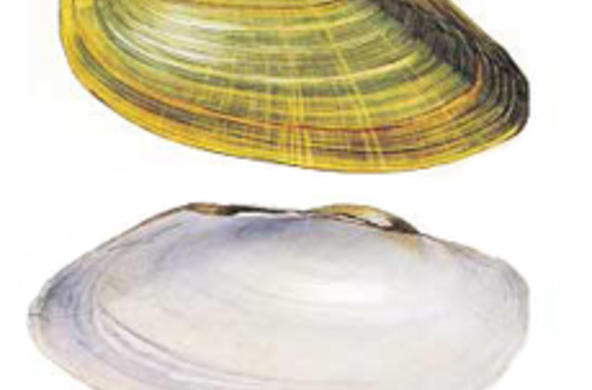
Finally, I’ve been working with academics and agency biologists on the management of Michigan’s freshwater mussels (an imperiled group of animals). I’ve helped to develop and run a test for mussel identification (now required of contractors who work on freshwater mussels). Joe Rathbun (a retired agency biologist) and I have been teaching a short class on mussel biology and identification.

Displaying 1 - 20 of 216
Seebens, H, LA Meyerson, DM Richardson, B Lenzner, E Tricarico, F Courchamp, A Aleksanyan, et al. (2025) 2025. “Biological Invasions: A Global Assessment of Geographic Distributions, Long-Term Trends, and Data Gaps”. BIOLOGICAL REVIEWS. doi:10.1111/brv.70058.
Limburg, Karin E., Dennis P. Swaney, and David L. Strayer. 2024. “River Ecosystems”. In Encyclopedia of Biodiversity, 600-619. Elsevier. doi:10.1016/b978-0-12-822562-2.00053-0.
Lacy, A, Y Jin, David L. Strayer, and S Lenhart. (2024) 2024. “Modeling the Population Dynamics and Movement of Zebra Mussels”. JOURNAL OF DIFFERENCE EQUATIONS AND APPLICATIONS. doi:10.1080/10236198.2024.2302015.
Dudgeon, D, and David L. Strayer. (09) 2024. “Bending the Curve of Global Freshwater Biodiversity Loss: What Are the Prospects?”. BIOLOGICAL REVIEWS. doi:10.1111/brv.13137.
Strayer, David L. 2024. Beyond the Sea: The Hidden Life in Lakes, Streams, and Wetlands. JOHNS HOPKINS University Press. https://www.press.jhu.edu/books/title/53776/beyond-sea.
Geist, JA, JL Mancuso, MM Morin, KP Bommarito, EN Bovee, D Wendell, B Burroughs, MR Luttenton, David L. Strayer, and SD Tiegs. (2026) 2022. “The New Zealand Mud Snail (Potamopyrgus Antipodarum): Autecology and Management of a Global Invader”. BIOLOGICAL INVASIONS 24 (4): 905-938,. doi:10.1007/s10530-021-02681-7.
Strayer, David L. 2022. “Comment: Novak et Al. (2021) Overestimated the Successes of Species Translocations and Minimized Their Risks”. Conservation Science and Practice 4 (7). Wiley. doi:10.1111/csp2.12694.
Strayer, David L. (2022) 2022. “Think Locally and Act Globally on Invasive Species”. Natural Areas Journal 42 (108). Natural Areas Association. doi:10.3375/0885-8608-42.2.108.
Ostfeld, Richard S., Kathleen C. Weathers, David L. Strayer, and Gene E. Likens. 2021. “Ecology of Lyme Disease”. In Fundamentals of Ecosystem Science, 2nd ed. London, UK: Academic Press.
Strayer, David L., Stephen K. Hamilton, and Heather M. Malcom. 2021. “Long‐term Increases in Shell Thickness in Elliptio Complanata (Bivalvia: Unionidae) in the Freshwater Tidal Hudson River”. Freshwater Biology 66 (7). Wiley: 1375-81. doi:10.1111/fwb.13723.
2021. Fundamentals of Ecosystem Science. Edited by Kathleen C. Weathers, David L. Strayer, and Gene E. Likens. 2nd ed. Elsevier. doi:10.1016/c2015-0-01951-7.
Strayer, David L., David T. Fischer, Stephen K. Hamilton, Heather M. Malcom, Michael L. Pace, and Christopher T. Solomon. 2020. “Long‐term Variability and Density Dependence in Hudson River Dreissena Populations”. Freshwater Biology 65 (3). Wiley: 474-89. doi:10.1111/fwb.13444.
Pergl, Jan, Petr Pyšek, Franz Essl, Jonathan M. Jeschke, Franck Courchamp, Juergen Geist, Martin Hejda, et al. 2020. “Need for Routine Tracking of Biological Invasions”. Conservation Biology. Wiley. doi:10.1111/cobi.13445.
Robertson, P. A., A. Mill, A. Novoa, J. M. Jeschke, F. Essl, B. Gallardo, J. Geist, et al. (2026) 2020. “A Proposed Unified Framework to Describe the Management of Biological Invasions”. Biological Invasions 22 (9): 2633-2645+.
Strayer, David L. 2020. “Non‐native Species Have Multiple Abundance–impact Curves”. Ecology and Evolution 10 (13). Wiley: 6833-43. doi:https://doi.org/10.1002/ece3.6364.
Schultz, ET, Michael G. Smircich, and David L. Strayer. 2019. “Changes over Three Decades in Feeding Success of Young American Shad Alosa Sapidissima Are Influenced by Invading Zebra Mussels Dreissena Polymorpha”. Marine Ecology Progress Series 628. Inter-Research Science Center: 141-53. doi:10.3354/meps13114.
Strayer, David L., , Rita Adrian, David C. Aldridge, Csilla Balogh, Lyubov E. Burlakova, Hannah B. FriedPetersen, et al. 2019. “Long-Term Population Dynamics of Dreissenid Mussels (Dreissena Polymorpha and D. Rostriformis): A Cross-System Analysis”. ECOSPHERE 10. doi:10.1002/ecs2.2701.
Ferreira-Rodriguez, N., Yoshihiro B. Akiyama, Olga V. Aksenova, Rafael Araujo, Christopher Barnhart, Yulia V. Bespalaya, Arthur E. Bogan, et al. 2019. “Research Priorities for Freshwater Mussel Conservation Assessment”. Biological Conservation 231: 77-87. doi:10.1016/j.biocon.2019.01.002.
Strayer, David L., Christopher T. Solomon, Stuart E. G. Findlay, and Emma J. Rosi. 2018. “Long-Term Research Reveals Multiple Relationships Between the Abundance and Impacts of a Non-Native Species”. Limnology and Oceanography 64 (S1): S105 - S117. doi:10.1002/lno.11029.
Strayer, David L., and Heather M. Malcom. 2018. “Long-Term Responses of Native Bivalves (Unionidae and Sphaeriidae) to a <i>Dreissena< I> Invasion”. Freshwater Science 37 (4): 697-711. doi:10.1086/700571.

Articles by David Strayer


Books


Projects