


Dr. Richard S. Ostfeld
Disease Ecologist
|
PhD, University of California, Berkeley
- Profile
- Videos & Podcasts
- Past Projects
- Publications
Richard Ostfeld studies the ecology of infectious diseases, including Lyme disease and other tick-borne diseases. By understanding the factors that influence tick abundance and infection, Ostfeld and his team can predict when and where exposure to tick-borne diseases will be high.
Ostfeld’s predictions are based on decades of research that places ticks and the pathogens they transmit in the context of forest food webs. Blacklegged ticks feed on many species of vertebrate hosts, but these hosts differ dramatically in their quality. Some host species kill many ticks but others are more permissive; some host species infect ticks with pathogens but others do not. Rodents such as white-footed mice and eastern chipmunks are high-quality hosts for ticks and for tick-borne pathogens, whereas most other mammals and birds are not. Understanding the ecological factors that affect the abundance of rodent versus non-rodent hosts enhances predictive power.
Changing climatic conditions can affect tick survival and reproduction. Ostfeld studies the effects of environmental variables on tick survival and behavior to predict where Lyme disease will spread as the climate warms.
Ostfeld has studied the relationship between land use and infectious disease for over 30 years. Disturbance and development of forested areas can degrade or fragment wildlife habitat, causing species diversity to decline. Predators like foxes and bobcats, which feed on mice, are sensitive to fragmentation. The loss of predators can lead to more mice and fewer non-mouse hosts for ticks, increasing the abundance of Lyme-infected ticks and disease risk for humans. Similar relationships between habitat destruction, biodiversity loss, and increased pathogen transmission characterize many infectious diseases worldwide.
In addition to understanding and predicting risk of human exposure to tick-borne diseases, Ostfeld is interested in preventing illness. Together with Bard College’s Felicia Keesing, he is leading a major study of the efficacy of tick-control methods in residential neighborhoods. The team has found that strong reductions in tick abundance and tick infection reduces disease incidence in outdoor pets but not in people, indicating that increased awareness that supports tick avoidance, detection, and removal will remain the primary method of Lyme disease prevention.
Projects
Books
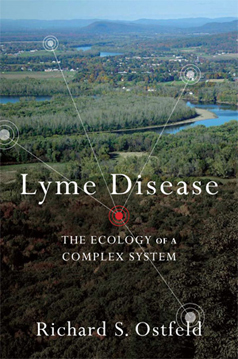
Lyme Disease: The Ecology of a Complex System
Oxford University Press, 2011
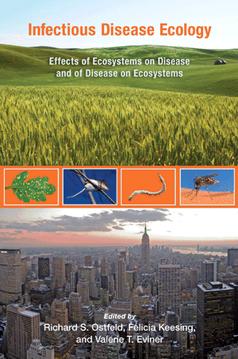
Infectious Disease Ecology: Effects of Ecosystems on Disease and of Disease on Ecosystems
Princeton University Press, 2008