
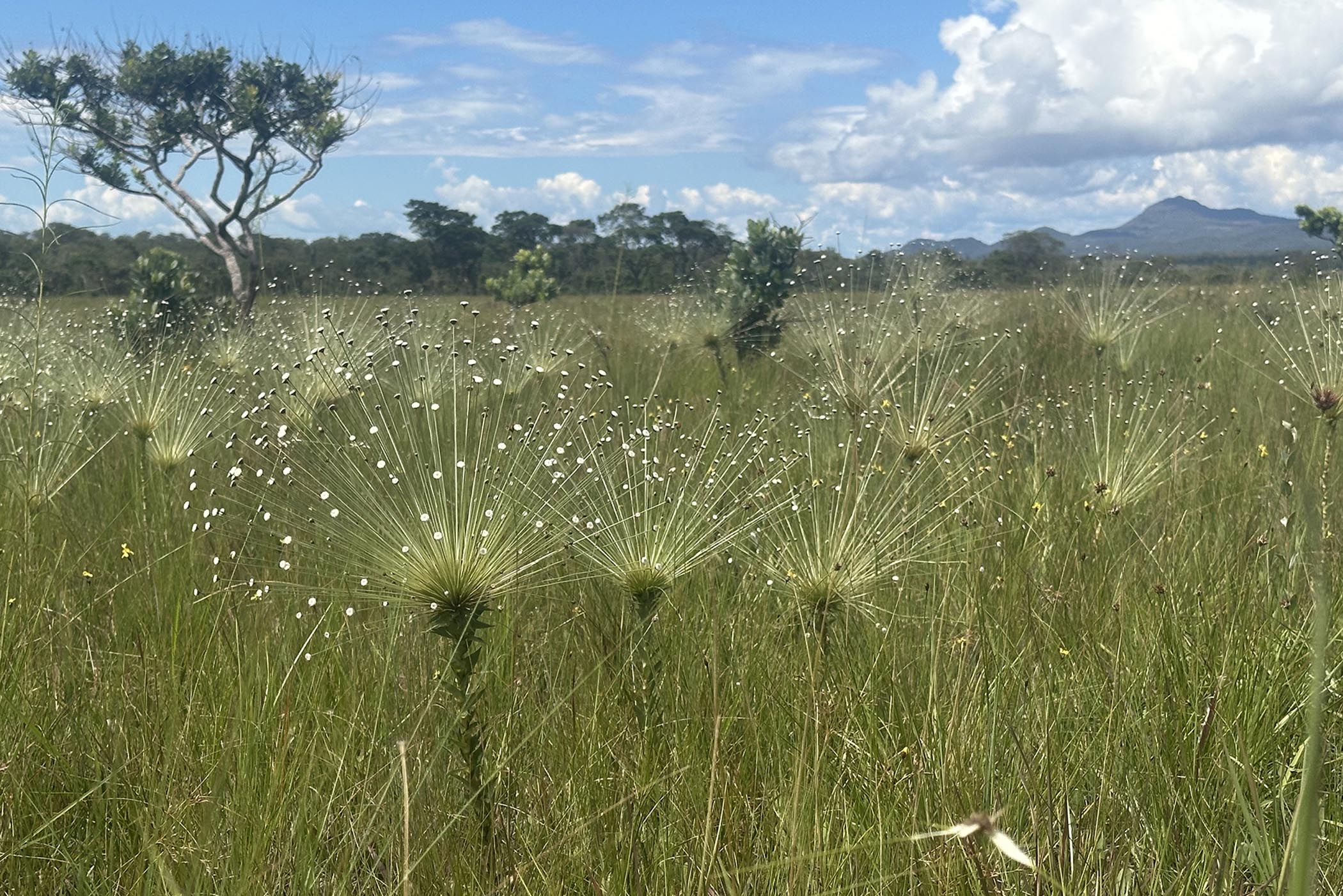
The goals of this project are to understand current and future carbon dynamics in tropical wetlands in Brazil’s Cerrado, an ecosystem that is important yet understudied and under threat of conversion e.g., from agribusiness, water use, and weak protections.
Wetlands are important contributors to the carbon cycle. They store huge amounts of carbon, but they can also be a major source of greenhouse gas emissions. These dynamics are poorly understood in everwet tropical wetlands, but even less is known in seasonal wetlands. Filling this research gap is critical for more accurate global carbon models.
We are working to understand where carbon is stored across ever-wet and seasonally wet grasslands — and when and where greenhouse gas emissions are most dynamic — in targeted Cerrado areas in and around Chapada dos Veadeiros National Park in Goias, Brazil. The Cerrado is recognized as the most biologically-rich savanna in the world, and it serves as the headwaters for two-thirds of the major watersheds in Brazil, including the Amazon. Our research has already begun to show that the Cerrado’s wetlands are also carbon storage powerhouses. However, that stored carbon could be transformed into greenhouse gas emissions in a hotter and drier future.
This project seeks to answer three main questions:
- What are the drivers of spatial and temporal differences in carbon storage and flux across Cerrado areas that are permanently wet, seasonally wet, and permanently dry?
- How do saturation extents in tropical grasslands change over both seasonal and decadal scales?
- How will rates and forms of carbon emissions from tropical grasslands change under future climates?
Our team is collecting a large variety of data to answer these questions. We are mapping the extent of the wetlands with drone surveys, quantifying soil carbon storage, and measuring carbon dioxide and methane emissions during different seasons and in laboratory experiments. Radiocarbon dating allows us to measure how old the carbon is in these systems and whether the peatlands are growing or shrinking. We are also collecting environmental variables such as temperature and humidity, water chemistry, and water levels at our field sites. We will leverage Earth System Models to project future carbon dynamics in these ecosystems.
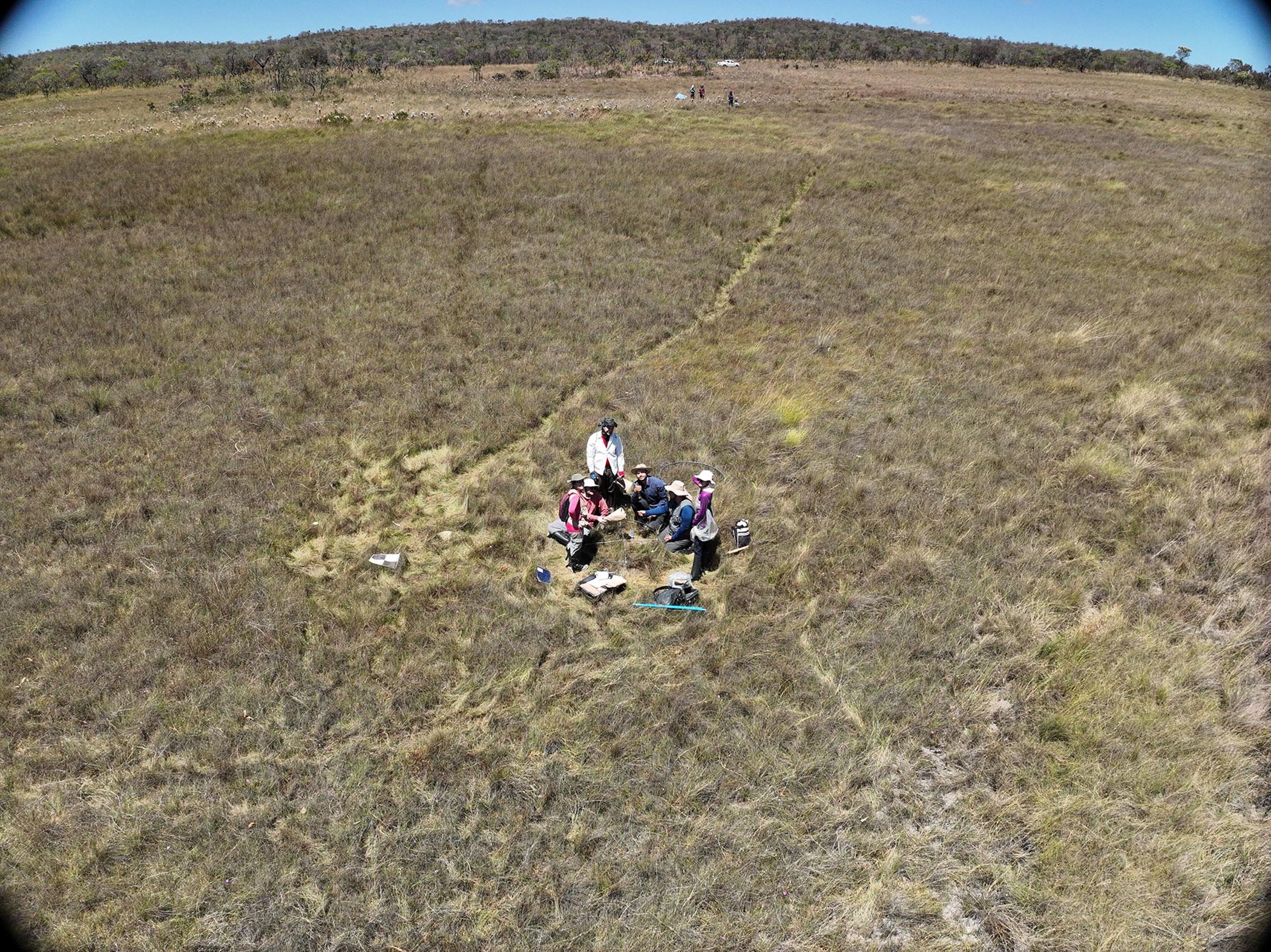
We hope our data will inform the protection of the Cerrado and its wetlands, which are under threat not only from climate change, but from urban and agribusiness development. Agribusinesses are converting the Cerrado for commodity crop production, draining its wetlands, or taking its water for irrigation. In some regions, as much as 50% of these wetlands have already been degraded. By improving recognition, mapping, and understanding of these wetlands, our research aims to strengthen their protection.
Through scientific papers, an open letter from COP16, and a policy brief at COP30, our team has been working to help policymakers and the general public to recognize the importance of conserving this ecosystem that is vital for carbon storage, biodiversity, and the regional water supply.
- Publications