


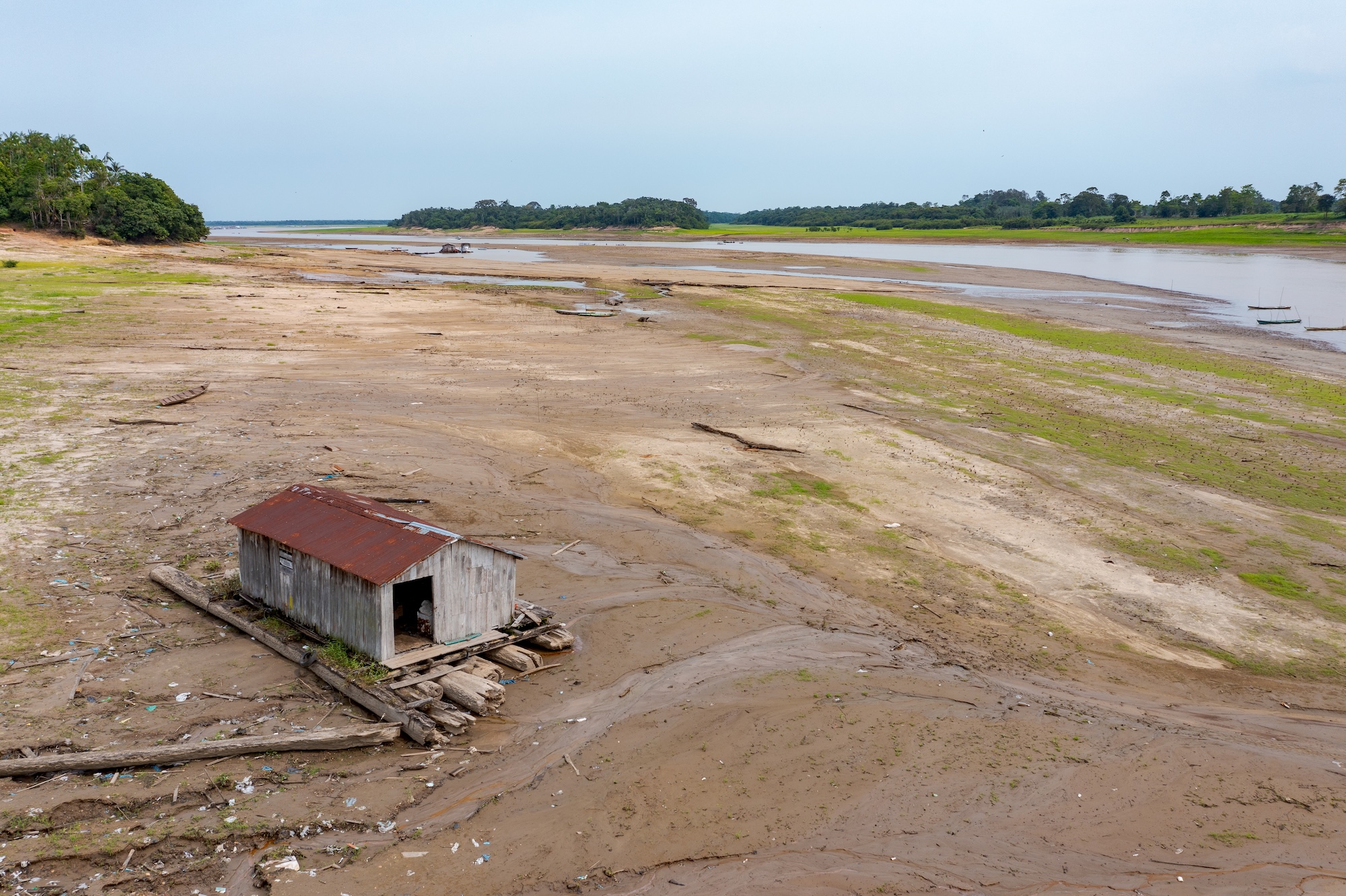
In fall of 2023, hundreds of dolphins overheated and died in lakes left behind by the shrinking Amazon River. An unprecedented drought and heat wave had caused the river to drop to its lowest levels ever recorded, and the water that remained heated up to unbearable temperatures. Amazon communities who rely on the river for transportation were left stranded without proper access to food, fuel, safe drinking water, or medicine. A recent paper — published in Science and co-authored by Cary Institute scientist emeritus Stephen Hamilton — confirmed that some lake waters reached spa-like temperatures of up to 41°C (105.8°F).
Will droughts and low water levels be the new ‘normal’ for the world’s largest river?
Droughts are only part of the story, according to Hamilton, who has spent decades studying South American rivers and floodplains, including the Orinoco in Venezuela and the Pantanal in Brazil. He has collaborated extensively with Ayan Fleischmann, the lead author of the Science paper, on studies of the Amazon River. Bizarrely enough, in 2023 (the same year as the epic drought), they published a paper documenting that Amazon floods are actually increasing in size. They found that since 1980, the river covers 26% more land when it reaches peak water levels each year, causing record-breaking floods.
In the Q&A below, Hamilton explains why extreme swings between record-breaking floods and record-breaking droughts may become the Amazon’s new ‘normal’, and why it matters for people and the rest of the planet.
How surprised were you by the severity of the 2023 drought and its impacts?
I've made thousands of temperature measurements in tropical waters, including in some very shallow places that can heat up a lot, and I’ve rarely seen a temperature like 41°C. It’s especially surprising because it was in a big lake, six feet deep, and it was the same temperature all the way down. In those conditions, there's no refuge for fish or dolphins.
How can the region be facing record-breaking droughts AND record-breaking floods?
It may seem counterintuitive that you're getting both extreme droughts and extreme high water levels, but in a way, that's the story we're seeing all over the world right now. Climate change is disrupting the hydrologic cycle, and we're seeing more droughts combined with heavy rains in various parts of the US as well.
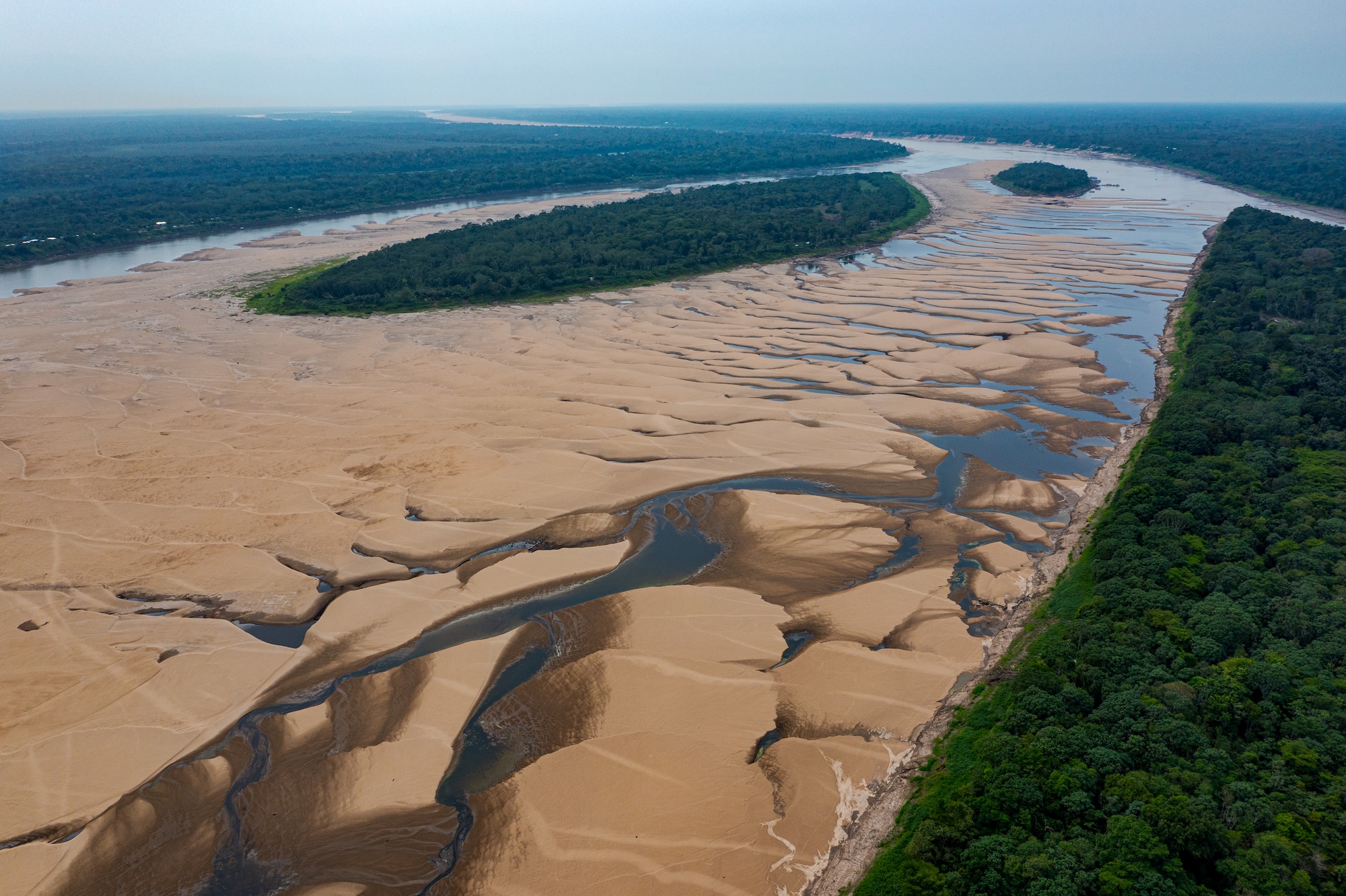
The Amazon is naturally a highly fluctuating system. Each year, it gradually increases and decreases by 40 feet or thereabouts. But we’re discovering that the highs are getting higher and the lows are getting lower over the last few decades. In both directions, it inflicts stress on people, plants, and animals.
How else is climate change impacting the Amazon River, and what does the river’s future look like?
We found that the lakes that are created when the Amazon recedes are heating up by about 0.6°C per year. That’s a long-term trend across the entire region, and it’s higher than the average across the rest of the planet. So it seems likely that we’ll be seeing more of these hot conditions that make life difficult in and along the Amazon and its tributaries.
We know that the 2023 drought, and another one in 2024, were linked to warmer-than-average sea surface temperatures. Another factor may be deforestation, which leads to less recycling of water back to the atmosphere to create precipitation. Roughly a fifth of the Amazon has been deforested, and some scientists are concerned that we could reach a tipping point that would shift the region’s vegetation from tropical moist forest to savanna, which would have really important climate ramifications for the rest of the Amazon basin and beyond. Deforestation has been slowing down in Brazil in recent years, but the pressure is always there to develop more soybean fields and cattle pastures.
Unfortunately, there’s still a lot we don’t know about the trends in this region. It’s so remote, and long-term studies are hard to fund. Most of the research has been concentrated near Manaus, because it's a big city, but we don't know nearly as much as we’d like to about other parts of the Amazon. Sometimes research teams — often involving foreigners — will come in and do a project for three to five years and then leave. But if you're trying to look for long-term trends, it's really hard to find any consistent data collection. To be fair, we have this problem in the US, too.
You’re part of a new project that aims to fill in some of those data gaps. Could you tell us more about it?
I’ve been advising on the Sentinel Lakes project, which, as a result of the 2023 drought, received funding from the Brazilian government to study five large Amazon lakes to better understand and predict the impacts of climate-driven extremes. It involves 14 Brazilian institutions, led by the Mamirauá Institute for Sustainable Development, where my colleague Ayan Fleischmann works. It's an all-Brazilian team, except for me and another researcher in California. I’ve been helping them get set up and decide which measurements to take, and so on. There were a lot of technical details to work out. The project is just ramping up, and they're getting ready to make their first measurements.
Researchers are working with local communities to set up the project, which is good in so many ways. It gives people ownership in the project, and helps with the exchange of knowledge, because local populations know their ecosystems better than we ever will.
The idea is to start learning more about these lakes and how they might be responding to high and low extremes in water levels, and develop an ability to predict not just when the water level might fall extremely, but how it might affect a particular lake ecosystem and the communities that live along it. That way, people could prepare. A lot of these small villages and towns are totally dependent on using boats to get supplies and export their products. In 2023 they found themselves suddenly cut off from this lifeline. It would be like if all the roads in the US were suddenly blocked — imagine the degree of paralysis and chaos that would ensue. On the flip side, high water levels can impact livestock and crop production, drive migration to other regions, increase disease risk, and worsen sanitation.
The Sentinel Lakes project has three years of funding to start, but we’re hoping to find other funding sources to turn it into the consistent, reliable, long-term monitoring program that’s really needed in this region.
What are some actions that could be taken to prepare for or adapt to the extreme highs and lows of the river?
In wetter years, they could prepare by planting crops on floating planting beds, for example. In drier years, they could make sure people have the food, medicine, and other supplies they might need to survive the season. They could get their boats out of harm’s way, and anticipate that they may not be able to get their agricultural products to the market. If it looks like droughts are going to happen more often, they might consider building roads to areas of the river that don't dry up. That’s something they’ve never had to do before.
The system we’re putting in place will watch out for ecological harms, too, and what might be done about it. For example, because the Mamirauá Institute was right along Lake Tefé where the dolphins were dying in 2023, they were able to get to work collecting data, and to capture some of the dolphins in distress, and relocate them to cooler waters.
You flew down to Brazil in July to help set up the Sentinel Lakes project. What were conditions like?
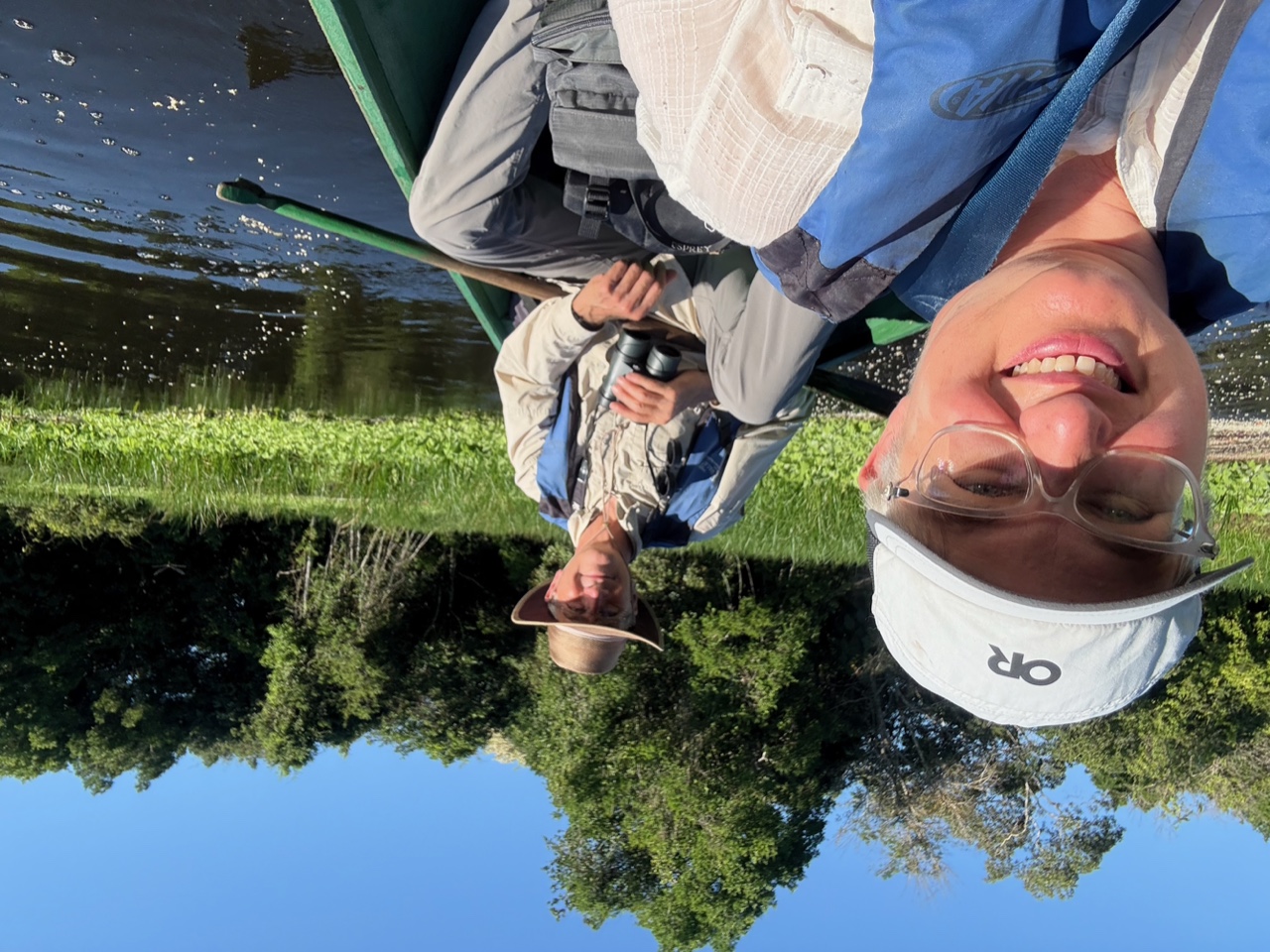
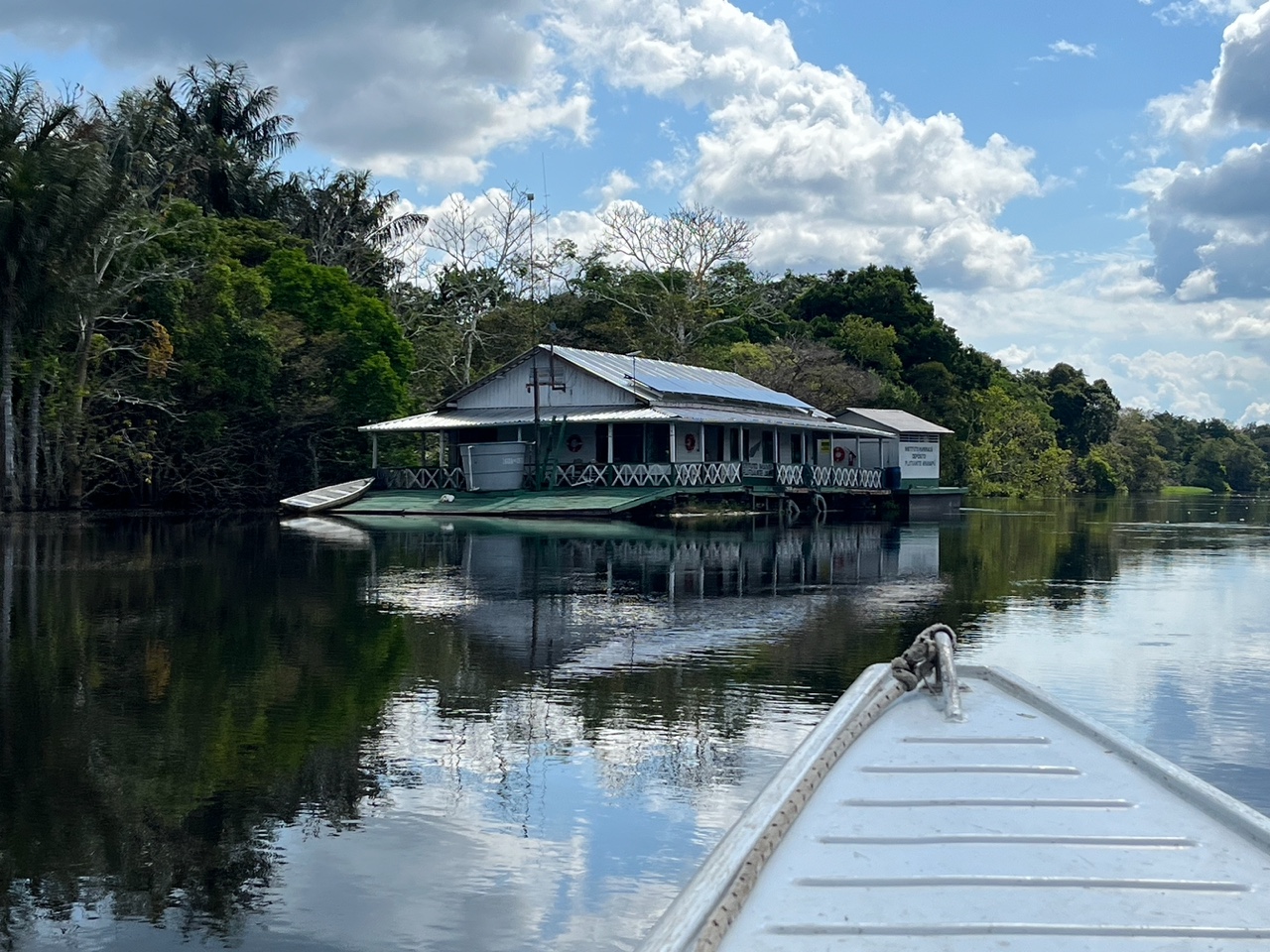
As it happens, water levels were pretty high at the time we went — not record-breaking high, but not that far below the record. We used canoes to slip through the forests, which were flooded with 25 feet of water, so we were literally halfway up the canopy. All the animals in the trees were much closer than you’d see from the ground in the dry season.
We visited several of the project’s field stations, which are floating houseboat laboratories in far-flung places. The distances in the forest are just mind boggling. You can travel for hours and see no dry land, going down these little channels of flooded forest. You feel like you're really deep in the wilderness, but because of Brazil's adoption of modern telecommunications, we could actually pull up Google Maps and see where we were.
We also got to climb up into the region’s first flux tower. The tower measures greenhouse gases and meteorological variables. It lets you calculate how much gas is being exchanged between the ecosystem — meaning the forest, soils, and water — and the atmosphere. It can help us understand how droughts and floods are affecting carbon storage and the production of methane, a powerful greenhouse gas.
We spent most of our time talking about the project — what we’re trying to achieve, protocols to ensure that we’re taking measurements in a standardized way, getting down into the weeds of, for example, exactly how to filter the water, when, and with what kind of filter.
Why is it important to understand the impacts of climate change in the Amazon?
A lot of people live there, including many Indigenous groups, and the biodiversity of the Amazon is almost unparalleled. In terms of climate change, what happens in the Amazon doesn't just affect the Amazon or even South America. The basin is bigger than the entire continental US, so it's important, just by matter of scale. Any changes in the Amazon’s carbon balance can have consequences for climate change over the whole world. We’re monitoring the water, which is just one part of this ecosystem, but understanding the impacts of changing water levels on the Amazon River will help us better predict the future of this ecosystem and all the carbon it stores.


