
From Discoveries to Decisions: Science for a Changing World
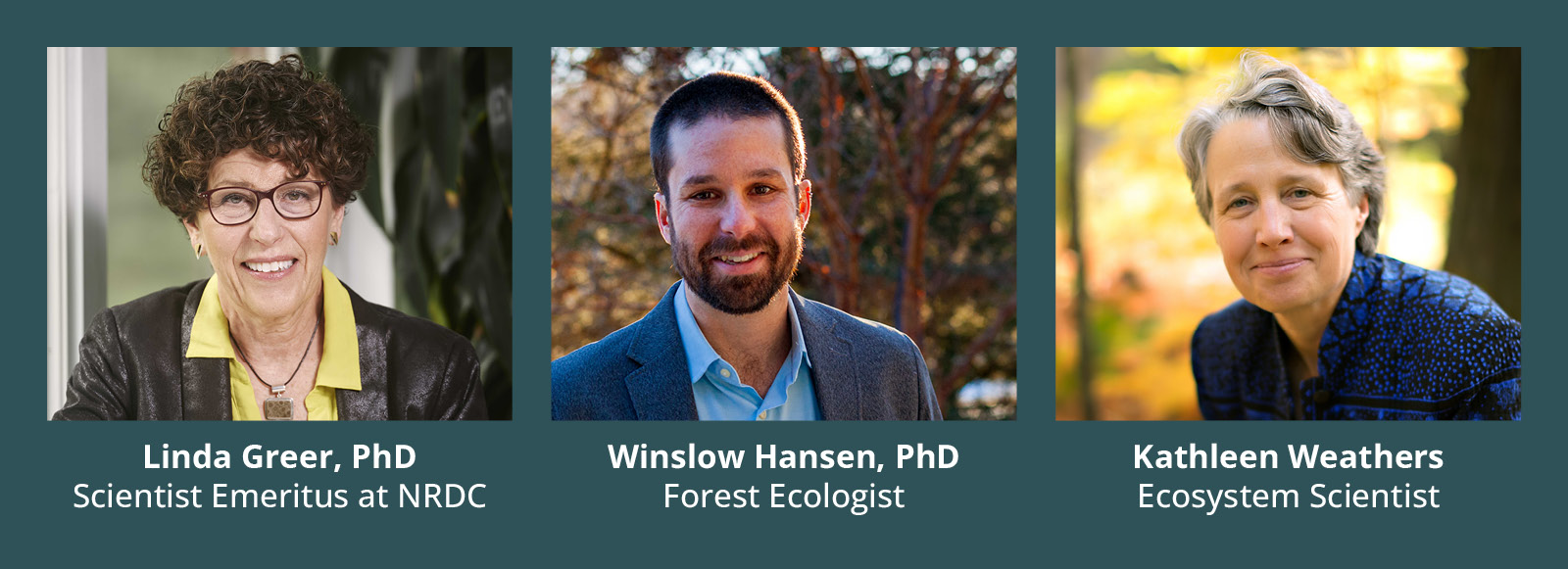
A conversation with Dr. Winslow Hansen and Dr. Kathleen Weathers, guided by Dr. Linda Greer.
Join Cary Institute of Ecosystem Studies for an inspiring evening in the heart of New York City. Over cocktails and conversation, hear personal stories and fresh perspectives on how collaboration is shaping the future of ecological science – from wildfires and forest resilience to healthy lakes, rivers, and streams.
Host Committee
Co-chairs
Beth Comstock & Chris Travers
Jane Banta Fisher & Rich Fisher
Nichola & Peter Gray
Kathryn Heintz
Fa & Roger Liddell
Robbianne Mackin & Eric Roberts
Tim & Coco Quinlan
Three Cairns Group
Stephen Tilly
Climate Champion
Phebe T. Banta
Sarah Buttrick & Hugo Cassirer
Elizabeth & Will Hewitt
Clean Water Partner
Edward Ames
Irene & Jack Banning
Frances Beinecke
Helena & Peter Bienstock/Shawangunk Valley Conservancy
Katherine Cassirer & Thomas Sosnowski
Anne & Paul Grand
Pamela Howard
Bindy & Stephen Kaye
Edith McBean
Joseph & Mary Nash
Stephen Trevor & Stephanie Hunt
Sustainable Forest Ally
Elyse Arnow Brill
Frederick W. Beinecke
Dr. Howard Bellin
Sophie Cabot Black
Tim Bontecou
Markley H. Boyer
Anna B. Carlson
Stephen & Sally Clement
Charles Copeland & Lyn Traverse
Lucy & Mike Danziger
Fleur Fairman & Tim Wallach
Josh Ginsberg & Katy Kinsolving
Mark Ginsberg & Darby Curtis
Wendy Goidell
Penny Gorman
Susan Hassler
George Hebard
Clay Hiles & Sarah Chasis
Steven Horowitz
Karen & Paul Kingsley
Jonathan Kramer
Torrie & Doug Larson
Kati London
Susan MacEachron & Michael Halloran
Simone Mailman
Marist University
Helene Marsh
Tom Parrett
Donna Raftery & Vincent Inconiglios
Nicholas & Shelley Robinson
Simon C. Roosevelt
Mona Staaf-Gunther
Barbara Tober
Jonathan Zearfoss
*List in formation
Dr. Linda Greer is an environmental toxicologist specializing in industrial pollution and toxic chemical exposures. She worked at the Natural Resources Defense Council (NRDC) for nearly 30 years, first focusing on driving reductions from domestic sources, then turning to globally significant sources for the last two decades of her work. She capped her career with four years at the Institute of Public and Environmental Affairs, the leading environmental NGO in China, as its only western employee.
Dr. Winslow Hansen is a forest ecologist and Director of the Western Fire and Forest Resilience Collaborative (WFFRC) at Cary Institute. This multi-year initiative unites 10 leading research teams from across the US to advance fire science. Co-developed with decision-makers, the Collaborative integrates field research, remote sensing, and state-of-the-art modeling to ensure that the best available science informs fire policy, management, and community adaptation.
Dr. Kathleen Weathers is a Distinguished Senior Scientist at Cary Institute and has spent the last two decades studying the impact of climate change on lakes. She was co-chair of the Global Lake Ecological Observatory Network (GLEON) for 10 years. Through international team science, GLEON seeks to understand, predict, and communicate lakes’ response to environmental change using in-situ and remotely sensed data. This work encompasses impacts from human activities, including climate change, road salting, and land use.


