


Lyda Hill Philanthropies has awarded $2.7 million to Cary Institute of Ecosystem Studies in support of the Western Fire & Forest Resilience Collaborative (WFFRC) program. The two-year grant, which expands upon the philanthropy’s 2024 investment, will allow the collaborative to develop science for living safely and sustainably with fire in western US grasslands and shrublands, emphasizing west Texas. It will also add capacity to study fire impacts on water resources in Colorado in ways that directly support land managers.
Led by Winslow Hansen at Cary Institute and launched with seed funding from the Gordon and Betty Moore Foundation, WFFRC is advancing fire science and science-based decision-making in the western US. By working collaboratively with land managers and other partners, WFFRC helps ensure that its research addresses management needs.
"WFFRC was founded on the belief that when scientists and land managers in fire-prone landscapes work together, they can achieve lasting benefits for both people and ecosystems," said Nicole Small, CEO of Lyda Hill Philanthropies. "The collaborative has demonstrated the success of this approach in forests, and we're excited to see it bring the same responsive model to grasslands and shrublands across the western United States while deepening WFFRC's work in Colorado."
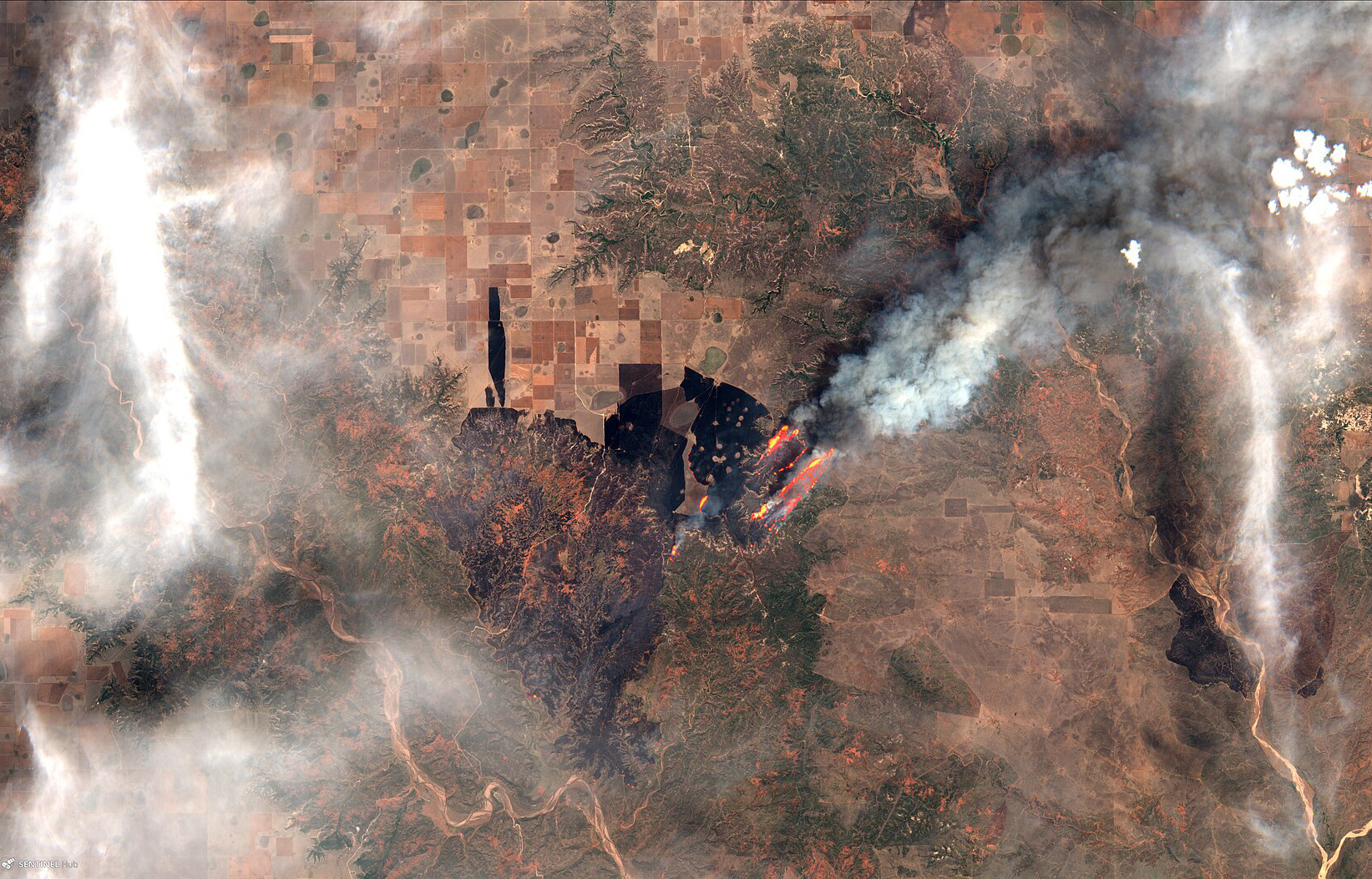
To date, the scientific advancements, models, and tools developed by WFFRC have focused primarily on fire in western forests. This new funding from Lyda Hill Philanthropies enables the collaborative to adapt its research and tools for grasslands and shrublands, with a particular focus on west Texas. This expansion is critical; recent WFFRC research found that fast moving fires are the most destructive. Of the 20 fastest fires in the US between 2001 and 2020, 90% occurred in grasslands or shrublands — and Texas was home to 20% of those fires.
“Most fire science has been built around forests,” said Hansen, “but fires in grasslands and shrublands operate differently. Our team is working to ensure that the tools to support decision making reflect those differences, to better protect these ecosystems and the people who live in and depend on them.”
Whereas forest fire trends in the West are largely driven by warmer, drier conditions and a century of fire suppression, fires in grassland and shrublands are more strongly influenced by changing human-caused ignition patterns, increased development, and invasion by exotic grasses.
Scaling WFFRC to Grasslands and Shrublands
New funding will allow WFFRC to pursue three expansion priorities.
Engaging Texas Land Managers: WFFRC will collaborate with land managers in Texas, including government agencies, conservation organizations, and private landowners — to identify key research needs and deliver actionable science that addresses fire challenges in grasslands and shrublands.
Modeling Fire and Vegetation in Grasslands and Shrublands: The collaborative will extend its proven forest model of fire, vegetation, and biophysical processes to grasslands and shrublands. This will aid land managers identify the causes and consequences of large, fast fires and help them assess how these ecosystems might change under different climate scenarios.
Satellite-Based Tracking: WFFRC will use satellite data to track fire behavior in grasslands and shrublands, to support near-real-time wildfire response operations, monitor post-fire vegetation recovery, and inform long-term climate adaptation and prescribed fire planning.
Protecting Colorado’s Water Resources
Previous funding from Lyda Hill Philanthropies supported conversations with Colorado land managers that highlighted widespread concern about how fire and forest management affect water resources.

With the new funding, WFFRC will use remote sensing and artificial intelligence to quantify how forest composition and structure influence key components of the water cycle — such as evapotranspiration and snow persistence — in the Colorado River Basin. Work will help inform how wildfire and forest management decisions may affect downstream water resources critical to communities and agriculture. WFFRC will also continue collaborating with Colorado land managers to co-produce actionable science responsive to local needs.
“All of the western US will be profoundly affected by fire in one way or another over future decades,” said Hansen. “It is not a matter of if, but when. We must ensure decision makers who are stewarding these lands have access to the best available science. WFFRC is working with them to create the actionable science they need, so they are equipped to make difficult decisions during a time of profound environmental change.”
Cary Institute of Ecosystem Studies is an independent nonprofit center for environmental research. Since 1983, our scientists have been investigating the complex interactions that govern the natural world and the impacts of climate change on these systems. Our findings lead to more effective resource management, policy actions, and environmental literacy. Staff are global experts in the ecology of: forests, soils, freshwater, disease, and cities.
Lyda Hill Philanthropies encompasses the charitable giving for founder Lyda Hill and includes her foundation and personal philanthropy. The organization is committed to funding transformational advances in science and nature, empowering nonprofit organizations and improving the Texas and Colorado communities. Because Miss Hill has a fervent belief that “science is the answer” to many of life’s most challenging issues, she has chosen to donate the entirety of her estate to philanthropy and scientific research. For more details visit lydahillphilanthropies.org.

