


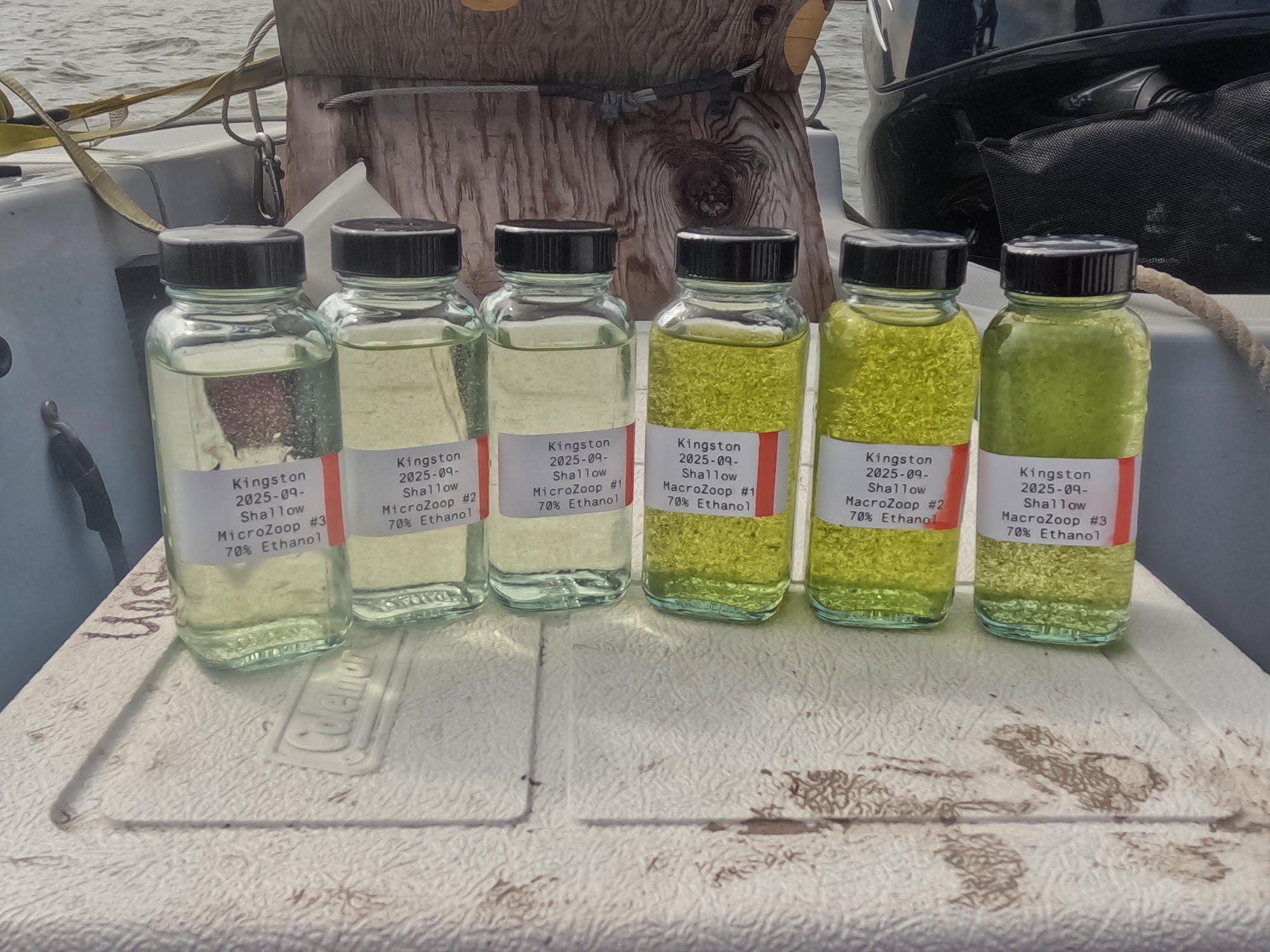
In September 2025, Cary Institute researchers happened upon a large algal bloom during routine monitoring of the Hudson River. Tests confirmed that the bloom contained Microcystis, a cyanobacteria that can produce toxins harmful to people, pets, and wildlife. It was the largest bloom observed during nearly 40 years of Cary’s long-term monitoring — stretching from Poughkeepsie to Catskill with the highest concentration around Kingston, NY — but it will not be the last. With harmful algal blooms (also known as HABs) on the rise throughout New York State, the U.S., and around the world, it is increasingly important to learn how to recognize them and what to do if you encounter one.
What are harmful algal blooms?
Harmful algal blooms in lakes, rivers, and ponds are usually caused by cyanobacteria, also known as blue-green algae. These photosynthetic bacteria are naturally present in many water bodies, but under certain conditions — such as when waters are warm, sunny, and calm — they can grow out of control and form blooms. Blooms can look like split pea soup, spilled paint, or dots or globs floating on the water’s surface. Although usually green, HABs can also be blue-green, yellow, brown, or red.
Some cyanobacteria produce toxins that can harm people or animals via skin contact, inhalation, or ingestion. Symptoms in people tend to be short term and can include throat irritation, skin rash, vomiting, and diarrhea. However, symptoms are more severe or even fatal for pets and livestock, and can include stumbling, seizures, disorientation, and difficulty breathing. Harmful algal blooms can be toxic to fish, birds, and other wildlife, too.
How to protect yourself, children, and pets
Because it is hard to tell if a bloom contains toxins, it is best to avoid drinking, swimming, boating, fishing, or other recreational activities in water where a bloom is visible.
“One of the good things about blooms is that they are often easy to spot, and if you can spot them, you can avoid them,” Gena Gallinger from New York State’s Department of Health said during a recent webinar. “If you’re seeing discolored, yucky green water with scums and blooms, this is likely a condition that could be a harmful algal bloom. Avoid the bloom. Stay in areas where the water is clear.”
Children and pets should not wade into water where a bloom is present, nor walk in bloom debris on the beach. However, areas where the water is clear are generally considered safe.
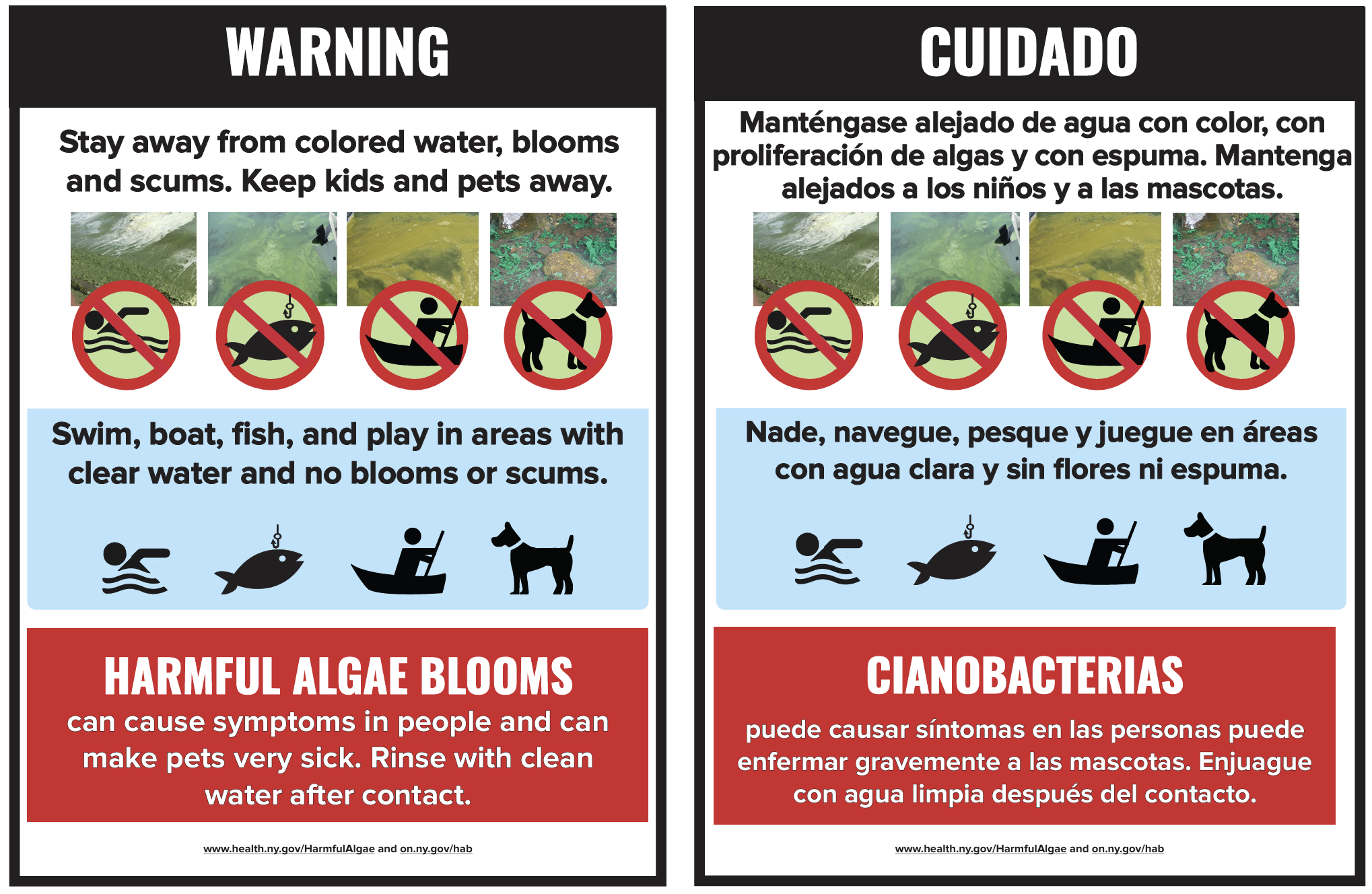
Swimming at regulated beaches, which are monitored by professionals, can reduce your risk of running into a harmful algal bloom. For other swimming spots, you can check the New York State Department of Environmental Conservation (NYS DEC) NYHABS map to see if an algal bloom has been reported in the area. Just keep in mind that the area may have a bloom that has not yet been reported.
If a person or a pet comes in contact with an algal bloom, rinse them thoroughly with clean water to remove the algae, and if symptoms develop, reach out to a healthcare provider or veterinarian.
What to do if you see a harmful algal bloom
Report it using the NYSDEC Suspicious Algal Bloom Report Form. Reporting harmful algal blooms helps the DEC understand the extent of the problem, and may help to inform policy and management strategies to reduce these dangerous events.
Should I worry about my drinking water?
People should not drink surface water or use it to prepare food or ice during an algal bloom. Chlorine, boiling, UV light, and most other at-home treatments will not remove harmful algal bloom toxins.
Households that rely on the public water supply need not worry about harmful algal blooms. The water is carefully monitored and goes through extra treatment to remove the algae and their toxins before it reaches anyone’s home.
“I’m not aware of any health report that’s ever been related to a HAB in public drinking water,” said Gallinger. “Blooms and toxins are really effectively removed by conventional treatment.”
However, Riverkeeper has raised concerns about the toxic byproducts generated by the disinfectants that purify public water during an algal bloom.
“More organic matter in the water and more chlorine in the treatment system means we are producing other toxins,” said Dan Shapley of Riverkeeper during an event at Cary Institute.
The best way to prevent these byproducts and other negative impacts is to avoid harmful algal blooms by keeping our waterways clean.
What causes harmful algal blooms?
Harmful algal blooms are fed by nutrient pollution, namely phosphorus and nitrogen, that enter waterways mainly from agricultural runoff, wastewater discharge, and urban stormwater runoff. When combined with warm conditions and stagnant water, the nutrient buffet allows cyanobacteria population growth to explode, forming blooms.
Will we be seeing more harmful algal blooms in the Hudson River?
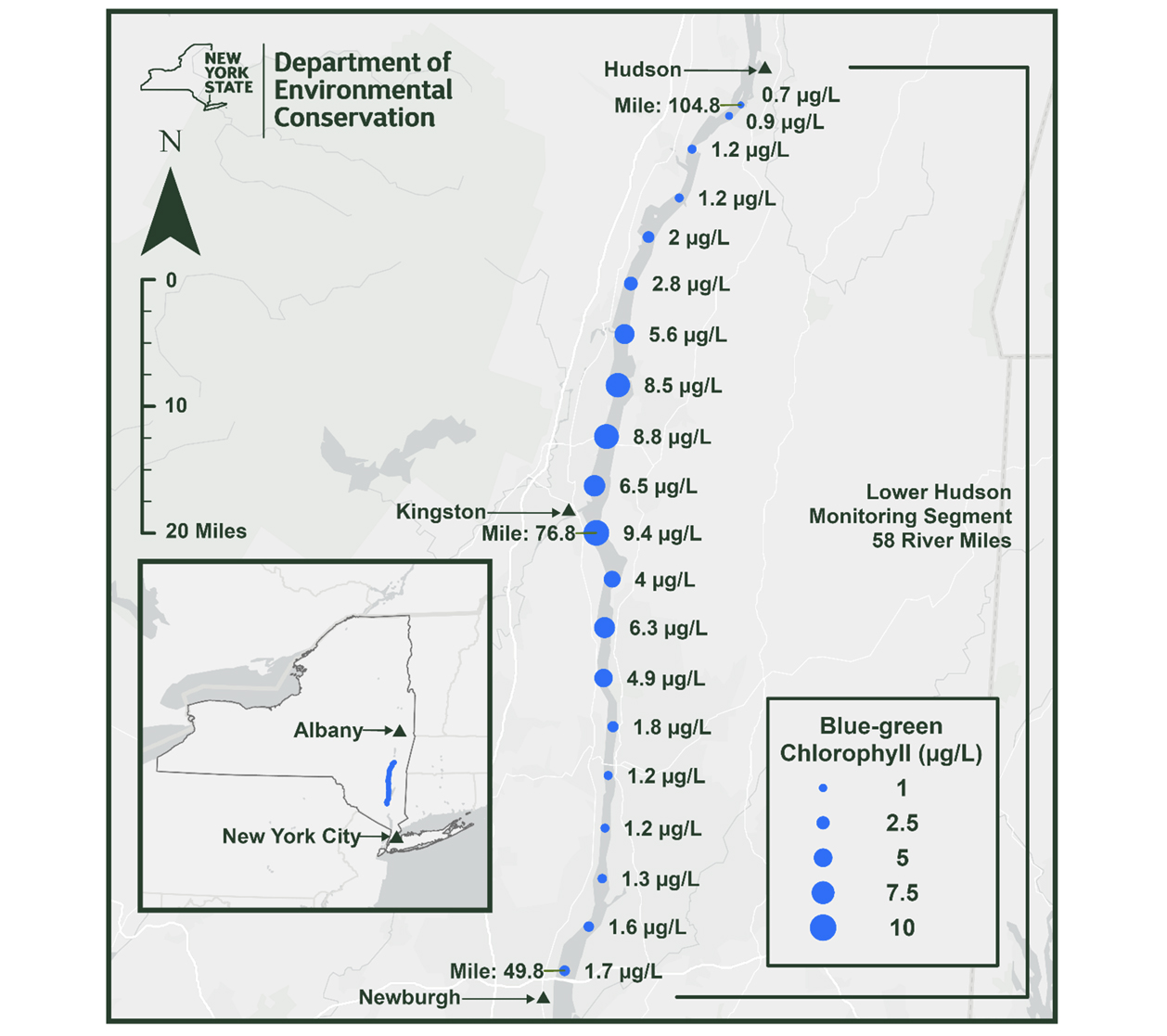
Working together, Cary Institute and Riverkeeper researchers have identified nutrient pollution, heat, and drought as the likely causes of the 2025 Hudson HAB.
“When you have a drought, you have less freshwater pushing out through the river, and basically that means the water sits around for a little bit longer,” explained Cary aquatic ecologist Chris Solomon. “That means the cyanobacteria have time to get a foothold and grow and increase before they get washed out to sea. So droughts can promote the occurrence of cyanobacterial blooms.”
Solomon added that Cary researchers have also documented long-term increases in the temperature of the Hudson over the past 80 years or so.
“It’s reasonably likely that we will continue to see significant HABs occur in the Hudson over the years to come, as the effects of climate change and nutrient pollution continue to ratchet up,” said Solomon. However, he added, scientists do not currently expect the HABs to be long lasting or to occur every summer.
What can we do about harmful algal blooms?
To reduce the likelihood of harmful algal blooms hurting people and animals and derailing summertime fun, actions to limit climate change and reduce nutrient pollution are crucial.
“Anything that we can do to reduce the effects of climate change is going to do some good in the long run for all sorts of stuff, including the health of the Hudson,” said Solomon. “But really our big lever is trying to attack the nutrient pollution problem.”
Fertilizer and manure runoff from agricultural fields are major sources of nutrient pollution to the Hudson, as well as discharge from sewage treatment plants.
To reduce nutrient pollution, Riverkeeper has been advocating for the state to establish phosphorus thresholds on waterways such as the Hudson. “Right now we don’t have a level for the Hudson that we can point to and say it’s over or under that line,” said Dan Shapley of Riverkeeper. “So we need to get those finalized, and DEC has done the work; they just need to finalize it so we have that threshold set.”
The organization is also pushing for total maximum daily loads — basically, a phosphorus pollution diet — for the Mohawk River and Wallkill Creek, two major tributaries that flow into the Hudson.
Shapley recommended upgrading sewage treatment plants to reduce phosphorus outputs, which is not currently required in the plants’ permits.
Another important component to preventing harms from algal blooms, detailed by Solomon and Shapley in a Times Union oped last year, is that “we need to prepare for the likelihood that harmful algal blooms will become more common on the Hudson. We must increase monitoring and research on the river to detect blooms when they occur, build early warning systems for river communities, and test understanding of the causes and controls of blooms.”
Under a three-year grant from the Hudson River Foundation, Cary Institute scientists are developing new river monitoring methods. They are also working with Riverkeeper to improve our understanding of how to predict and manage future blooms. However, Solomon and Shapley warn that funding for these types of efforts is typically limited and tenuous, and they call for long-term funding solutions from the state for these and other research and monitoring efforts.


