James Cave 0:02
Hello, and welcome to another episode of the Jiffy Audio Newsletter Podcast. Okay, I'm being very quiet right now because it's nighttime, and I'm next to a little pond right next to my house, where there's a lot of frogs. If you can hear them, I'm standing next to this pond because this episode is all about mud season here in Upstate New York, and I definitely want the frogs to feel safe, it's their time, it's their time, of course.
So, in this episode, we're gonna learn all about mud season and why it exists. Yes, it's the Jiffy Audio Newsletter Podcast, the podcast that really flows with the seasons, and this season in the Northeast, at least, is the season of mud. Well, there's no mud season solstice or any official beginning or end to mud season that I know of.
Anyone who's lived in the Northeast for this winter to spring transition knows that from about early March to late May, the muddy ground abounds, and while most people want to get through it. I've been learning a lot of interesting mud facts like this. The
Jane Lucas 1:03
scientific field knows a lot, and yet at the same time we are still so much at the beginning. A lot of times we like to say that we know more about the surface of the moon than we do about the soil underneath our feet.
James Cave 1:15
Isn't that something? And here's another mud fact:
Jane Lucas 1:18
soil is so complex, you know, you have to think about the fact that you get a teaspoon of soil, it has more microbes in it than there are humans on earth, which is like a kind of incomprehensible thing to think about, because there are so many teaspoons of soil under our feet.
James Cave 1:34
And also, here's mud fact number three:
Jane Lucas 1:36
soil takes about 500 years to grow top soil for one inch, so I don't think we need 500 years, but it takes a while to do some of these projects. It'd be really cool to answer them in a week, but it's not gonna happen that fast.
James Cave 1:51
I learned all these mud facts from my interview with Dr. Jane Lucas, a soil ecologist at the Cary Institute of Ecosystem Studies in Millbrook, New York. I paid Dr. Lucas a visit because I had so many questions about mud season. First of all, what is mud season, and why does it exist? And for that matter, what is mud? And could there ever be a mud season on Mars?
We also talked about some of her current research projects, such as her stressed out soils experiment, where she's currently stressing out more than 80 plots of land to look at 16 different ways that warming, drought, bactericides, and fungicides could combine together to influence soil health and productivity. For example, soil can respirate more and release carbon dioxide into the atmosphere when it's stressed out, just like me, Dr. Jane Lucas. Thanks for being here on the podcast. Can you tell me once and for all, what is mud season?
Jane Lucas 2:40
For sure, yeah, so I love that soils have this seasonality, and of course, the hard part about soils is that they're under our feet, and it's hard to see them, but you know, in the same way that we can see signals of seasonality above ground, we can start to see them below ground as well, and really, mud season is just a signal of new seasonality below ground, but generally, if you think about soils, you know, as we come into spring, they're coming out of this thaw time, right? They're frozen, which is kind of like almost a hibernation for the soil, you know.
If you compost, you probably know that your compost isn't moving fast in the winter because it's cold, and the reason for that is that a lot of the, you know, life and function of our soils is driven by tiny microscopic organisms, and they are really temperature dependent, and so in the winter they're not working that hard, it's too cold, they don't want to work that hard, but as it starts to thaw, we can start to see that these microbes are waking up, and that means they're starting to decompose material, they're starting to create new nutrients being released into the system, and that is why plants are able to grow, because all of a sudden they're getting this flush of nutrients that they're available, and then as we move into the summertime, that's when you're seeing this below ground, really ramp up activity, you're getting a lot of growth happening below ground, you're getting very fast turnover of things like, you know, leaves come into the system, and it's going to get decomposed quickly, because those microbes are hungry, but they're also at the perfect temperature to grow fast.
They like it when it's warmer, and that's really key to allowing plants to get access to nutrients. It also drives below ground animals, like, you know, worms - all these things are going to be maximally happy when it's in that warmer temperature, of course. If we get too warm, and more importantly for soil, if it gets too dry, that can really limit activity.
So sometimes we might see that in our periods of really hot time with low moisture, all of a sudden that activity drops, and that's why plants might start to desiccate. We see that a lot of activity drops, but that's not something that we deal with horribly here in the Northeast, because we actually do have a lot of moisture, although with climate change we are seeing that moisture come more intensely.
Then kind of these more extended periods of no moisture and I think that's going to be a little bit hard for our soils to manage because in reality they kind of like that Goldilocks like not too much water not too little water yeah right they like it they like things to be kind of normal and then of course as we start to move into the fall we are seeing those temperatures shift, but we're also seeing huge inputs of biomass into the soil, because leaves are dropping from the trees, and so it's this kind of unique time where soil is getting this big infusion of new products that they can start to eat, but it's getting cold, and so they can't really break it down that fast, and that's why, you know, in the fall things stick around for a while and we still have leaf litter all the way into the winter time and then that cycle kind of starts again where the winter they're starting to turn down they're not completely dead they're not there's still lots of life below ground but they're really kind of turned that dial down and think what we'll see with climate changes that the timing, a lot of this is shifting.
We're seeing that we're getting kind of later initial freezes, and so that's shifting when a lot of this system is going to be active and inactive, and in some ways actually it'll keep things active for longer, which can be good, but we actually really like that period of dormancy, because that's a good time for storage to happen, and you want things like carbon to be put underground, and if you had a soil that just was always ramped up really high, working really hard, it's actually going to lose a lot of nutrients and carbon, because just like us, our soil is breathing, and if it had to be ramped up a ton, it'd be like making us run all the time, it's breathing, it would be releasing a lot of co, so we actually need it to slow down to keep some of that carbon below ground, and so hopefully we can kind of figure out how to manage our soils as we're shifting how long they're active.
James Cave 7:04
Okay, well, as a soil scientist, is the mud season your favorite time of the year?
Jane Lucas 7:08
It's a great question. I can appreciate the mud season, but it is not my favorite time of year, but it is a fascinating time of year because so much is going on. I also personally have two dogs that probably influence how much I love the mud season, because it's a lot of having to clean them off from our dirt road, but I think the mud season is really fascinating, and it gives us a little glimpse into a really rich history of our soils, and there's a lot to kind of understand of why is this going on, why do we get such an intense mud season, especially here in the Northeast, compared to other places? So, I'm excited to kind of dive into those questions more. So, whatever you're excited about,
James Cave 7:49
that is a request. Why is it so intense here? Yeah, what is so unique about our region that makes it such a season, an actual season.
Jane Lucas 7:57
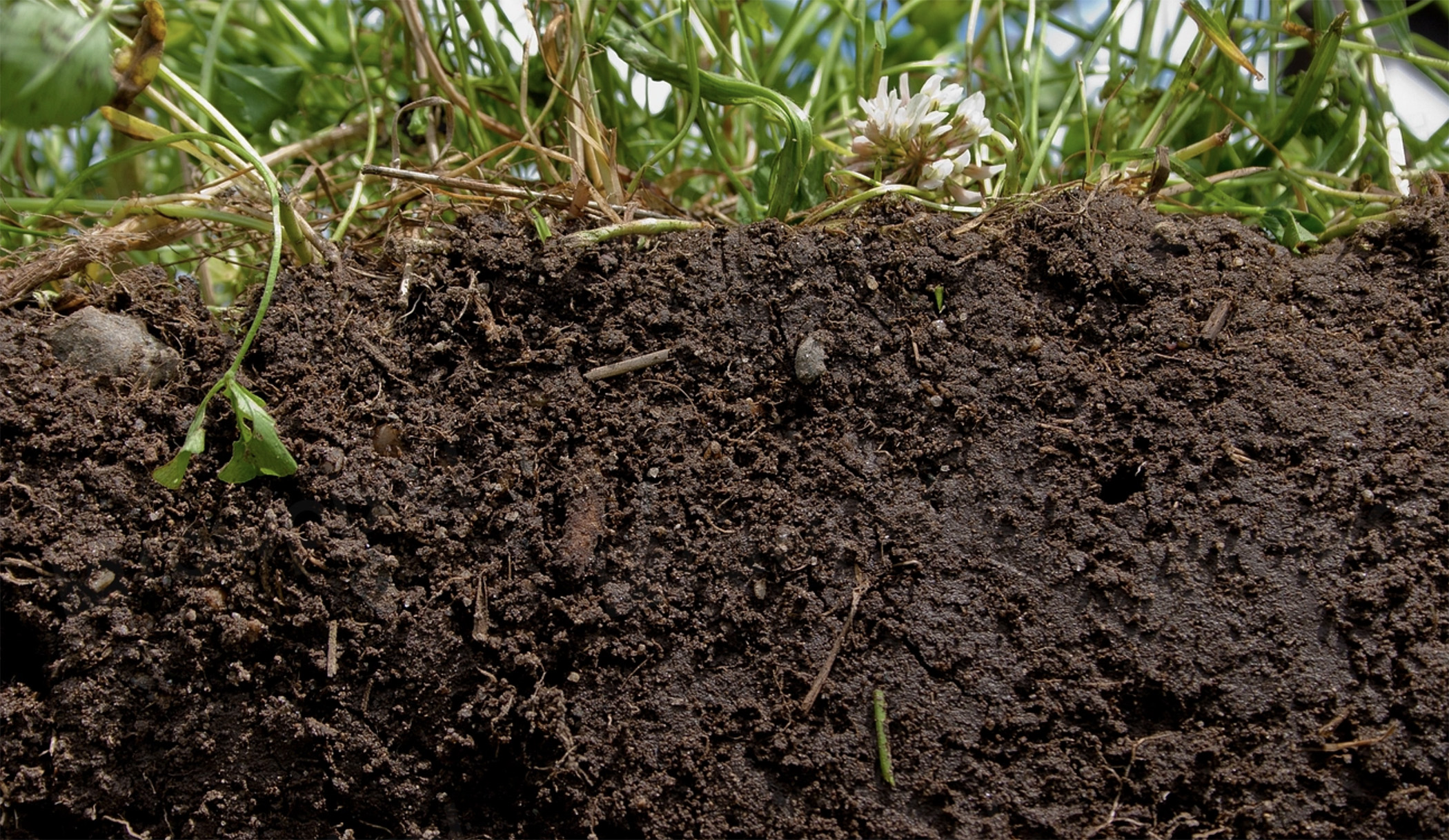
So, there's lots of aspects about it. One thing to think about is that the this kind of area, the Northeast is known as an area that had this big glaciation effect, where we had glaciers that were covering this area, and then as those glaciers kind of receded, it created the beautiful aspects of the Hudson Valley and these deep valleys, as well as our mountain tops, but in that process, when glaciers kind of move forward and then they retreat, they shift soil a lot, and that's why we have kind of these rich valleys, and then really rocky upper kind of aspects of our, you know, tops of our mountain tops, and unlike the Midwest that has really deep top soil, our glaciation effect has caused our topsoil to not be super deep, and that's why you know, probably for a long time we had farmers here, and then they realized, oh, hey, it's pretty easy to farm in the Midwest, where they have feet and feet of topsoil to work with, and because of that, you know, we don't have the deepest of topsoil, we still have plenty, but it's not the deepest, but then quickly we're getting into different types of soil that's a little bit more compacted and that is really important because the structure of soil really drives mud season and if you go back you maybe learned about this even in elementary school but soil is made up of just a couple of things it's made up of mineral materials and that's things like silt, clay, and sand, that's like the main component, that's the physical component of soil.
It also has organic matter, which are like the microbes that live in it, the insects, bits of old plants, and then it's just water and air, like that's what soil is made up of. And here in the Hudson Valley, mud is mostly not a very sandy component. Sand drains water really well, but when you have silt and clay, these are really tiny particles, and they actually hold on to water really well, because they have really high surface area, so they keep lots of water, and unlike a sandy system that allows water to drain quickly, that's why we have a lot of mud, because most of our soils are really high in this clay and silt, and then the other reason we get a lot of mud has to do with our climate, so mud season happens because over winter we get good deep freezes into that soil, it's the top all the way down, couple of feet, and so we have really nice, you know, solid hard ground, and that's why you can't be planting in the middle of winter.
But then what happens is that we get these kind of rapid warming and then freezing experiences, which we all know we're in it now. We thought it was spring, now it feels like it's not so springy, and then that causes that top layer of the soil to unfreeze, but it's sitting on top of still frozen soil, and so that's where what ends up happening is we get a lot of water accumulating at the top, hanging out, creating a mud season, and then it keeps that top layer really slick and wet, and it can't drain deep because the bottom is still frozen, and so unfortunately our mud season is really driven by the fact that we get these really quick warm-ups, and then freezing again at night, and it pushes all the water the top, keeps it stuck in that really high clay, silty soil, and then it can't penetrate deep, and so unfortunately we're getting more and more of these freeze thaw cycles as we see our kind of climate changing here, so mud season is definitely here to stay, and if you're not a fan, hopefully we can convince you to be a fan, but it's not going anywhere.
James Cave 11:29
I'm a fan, I'm a fan, you convinced me. Actually, love the mud season now. I feel like I see mud differently, like I can even empathize with it a little bit. So I want to move on to talking about your Stressed Out Soils Project SOS that you've been doing now for a few years at the Cary Institute, and I have to say, I'm, you know, I'm personally really stressed out these days, so I think I can understand a bit of what your soil is going through, but I have to ask Dr. Jane Lucas, why are you stressing out the soil so much? Isn't there enough stress to go around?
Jane Lucas 11:59
I do sometimes feel bad for the four factor plots. I'm like, I'm sorry, you're really getting hit with all of it, you know. We're putting them with the kitchen sink, but I love the fact that the Cary Institute has a lot of good space, and I'm really using it as my kind of living laboratory.
So, one of the big things in soil science is that we know that as our world is changing and we're interacting with soil. Our soils are being hit by what we would call a lot of stressors, and those can be anthropogenic, you know, things like the use of fertilizer, tilling, or use of pesticides. So, all of those are going to affect the soil.
And then we also know that there are these other really kind of big ideas of changing temperature, changing precipitation. There's these big climatic what we call abiotic stressors that are going on, and one thing about science is that we often like to study one of those factors at a time, maybe one or two, so that we can really understand, you know, what does warming do to soil, or what does, you know, adding a fertilizer due to soil, but we also know that global change is this multi factor, really high dimensional process, where soils aren't just going to get warm, they're going to get warm and sometimes a drought, and then we're also maybe going to add an antibiotic on top of them, and we're going to have to till them or harvest our food out of them, and so I'm really fascinated about this idea of what happens to soil when you have more than one interacting stressor, and so that has helped me kind of get excited about this project called Stressed Out Soils, or SOS.
The idea here is really trying to understand what happens to soil health when you have multiple interacting factors, and so what we have is a big plot of land up at the Cary Institute, and we have some plots that are getting artificial warming. We actually create these kind of - they look like mini greenhouses that keep the temperature about two degrees warmer inside of the chambers. We also have roofs on them that reduce the reduce the precipitation by about 70% in the end that causes the soils to be about 20% drier.
And then some of the plots are getting an antifungal, which maybe you don't think about first when you think about a stressor, but it's really common for agricultural practices to add antifungals, because especially when you work in a fruit system, you know, microbes, fungi, they want to eat the fruit too. It's a really awesome resource, and it can be really detrimental to farmers to have these blights come through, and so a lot of them will put some type of antifungal on their farms. It's a totally, you know it's part of the process, but that also can drip then into the soil, and I, you know, potentially affect what's living underground.
And then the last thing I'm really interested in is antibacterials, and antibacterials are entering into the environment in lots of different ways. One is when we take our own. Medicine, a lot of it isn't going to be metabolized. We're actually just going to kind of put it in one end and it'll come out the other, and so it enters into our wastewater systems, and it's pretty hard for our wastewater to clear that out. And so that means our streams, and then the river banks, and then the areas around those effluent could be getting doused with antibiotics, and then also when farmers are irrigating their fields with this kind of untreated water, that's another way that antibiotics can enter into the ecosystem, but maybe one of the biggest ways they enter in is that a lot of livestock are using antibiotics, it's a really important thing to keep them healthy and prevent disease, but similar to us, their waste can have those antibiotic compounds still in it, and it could be, you know, just an animal is out consuming an antibiotic in the farm or on the barn, and then going out and eliminating into the field, and so that's another way that these enter.
So SOS is trying to look at all of these different stressors, and we have a bunch of different plots that get different combinations, and so some of them get the high stress, or they get all four being affected, and and I'm really fascinated to know what's going on underneath.
James Cave 16:13
If I was a soil, I'd probably be on the high stress side.
Jane Lucas 16:16
I think a lot of us might fit in that high stress side, you know, we ought to maybe think about taking some of those stressors away from our lives.
James Cave 16:24
Yeah, so what are you learning from these plots, especially the stressed out ones? And what are some learnings that we can use, sort of out there in the real world?
Jane Lucas 16:34
Exactly. So, what I like about this experiment is, we, while soil is our focus, we're doing a lot of plant work, we're looking at lots of dimensions of the soil and, and the system, right. And so we work a lot in grasslands, because those are commonly where a lot of management is happening.
And what we're finding are is really interesting, where above ground we are seeing actually our stressors are enhancing plant growth, which is not what we expected, but it's particularly a lot of growth is happening. One thing you could think about is maybe these plants previously were having to fight off some infections, and so when you add antibacterials and antifungals, they don't have to invest in much in fighting an infection, and our warming is warm, but it's not so warm that it's crazy stressful to the plant, so it might allow them like a little bit of an extended growing season, so that might be why you're getting enhanced plant growth.
And then you know, for the drought it is drier, but maybe it's not, you know, we're in the Northeast, we have a lot, a lot of rain, so maybe our plants are like, yeah, it's drier, but it's, it's not so dry that it's causing me to perceive a stress, so yeah, interestingly, our above ground plants are doing better, and in particular, the native species are doing really well, and it's actually the invasive plants that are decreasing in diversity, and the natives are enhancing, so you know, this is not what I thought would happen initially, but that is super science.
But what's happening below ground is a really different story. So, what we're seeing below ground is that as we add stressors, you know, moving from one to two all the way up to four, we see that generally both bacterial and fungal diversity are declining, they're getting, you know, just less organisms that can handle all of those different stressors, you know.
You, as an organism, might be able to say, like, yeah, I can handle a little bit warmer, or I can handle a little bit of drought stress, but I don't have enough of a toolkit to handle drought, plus warming, plus an antibacterial. So we are getting declines in that, and we also just seeing similarly that their activity is dropping dramatically, either because we're killing a bunch of them or they're going into dormancy because they're just too stressed out, and then interestingly, because we're doing the genetics with these, we can actually see that not only is the diversity dropping, but also the different tool kits genetically that they have is getting eliminated, so they're what we're seeing is their genome is reducing, and in fact that probably means that they're just saying, you know, in the past I could invest in being really good at nitrogen mobilization or handling phosphorus and helping with nutrient cycling, but I got to drop all of that and focus just on surviving my stress, which will be an issue in the long run, because we need them to have that diverse toolkit to keep all of those functions going, and so I think ultimately what we're getting is this distinct difference in above and below ground responses, and it'll be really fascinating to see, you know, initially we're getting some enhanced plant growth, but if we're getting continued stress below ground, I do think that eventually those plants are no longer going to benefit because their below ground community is is decimated, and that's going to cause this kind of - we're seeing this kind of like initial warning in the soil that might eventually track above. Ground, so yeah.
James Cave 20:01
Well, soil shutting down. I am really identifying with this stressed out soil. It's like I could just feel I turn inward too, you know? I focus on shutting things down so I can survive, you know what I mean. And I'm kind of feeling sad for the stressed out soils, you know? Like, how do you feel about stressing out soil.
Jane Lucas 20:21
Yeah, I mean, I think you have to kind of fall in love with soil to spend your whole life devoted to it. So, I really think it's, it's beautiful to see how responsive soil is. And I think, you know, for a very long time we think of soil as synonymous with dirt, and they really technically are the same thing, but we dirt feels very unalive, and soil is just so alive.
There's so much going on, and actually, the thing that made me most marvel at soil was I'm not only interested in the microbes, but I'm interested in all the little tiny organisms, the insects, the arthropods that live below ground.
And the first time you do this thing called a funnel extraction, where you put soil in a funnel with a mesh screen. You put a lamp at the top of it. Those little organisms don't want it to be too hot. They live in the soil. It doesn't normally get super hot, so they all run away from the light, and they run into your collection vial. Then, if you look underneath the microscope, you're just genuinely blown away that there's so many things underground, like it just seems impossible that in, you know, just about a mason jar size of soil you could have hundreds of tiny little organisms that most, you know, they kind of look like aliens half the time.
It's just really cool to know how teeming with life soil is, and, and, and it's really responsive, and I know that it's not as charismatic as, like, you know, the beautiful elephant of the savanna, which I also get to study sometimes, and it's wonderful, but I hope that people get chances to see the life underground, because I think it really makes you realize that there is literally a jungle underneath your feet, and it's doing so much, and we just pass over it all the time.
James Cave 22:06
Well, thanks for helping me see soil in a new way. I mean,
Jane Lucas 22:09
of course,
James Cave 22:09
I definitely appreciate it a lot more.
Jane Lucas 22:11
I'm always happy to be a fan of soil, and to talk to other people who are interested in it. I have to say, it's a really great time to be a soil scientist. I feel like people have finally realized that soil is a pretty cool thing, and it really feels like there's more passion around it, and I think part of that is because we've started to realize how much life is in our soil, and hopefully people can continue to appreciate that.
James Cave 22:34
I have videos of the stressed out soil site. Dr. Jane Lucas gave us a tour, and you can find that video on the James Cave Instagram feed at James Cave, and I have to tell you, I learned so much from Jane about soils, but I learned all about Jane herself from listening to a show called From the Forest. It's a podcast and radio show by the Catskill Forest Association, who had Jane on their show a little while back.
You got to be sure to check out what they're doing, they're doing some really cool stuff. It's Catskill forest.org and Jane and I talked so much about soils and her projects, and I mentioned earlier in the show about the prospects of having mud season on Mars.
Well, I saved that for an audio exclusive available to Jiffy Premium subscribers, the Jiff-Feemers. So, if you'd like to subscribe, it really helps financially support this type of work that I'm doing, and you can find the link to upgrade or subscribe in my show notes. Okay, now we close out the episode, we return to the Frog Pond, where we started it all this episode. Well, that does it for this episode of the Jiffy Audio Newsletter Podcast, the only podcast about upstate New York. No, that's not true. There, there are other podcasts, and I know this because my neighborhood local magazine, Rural Intelligence, recently posted a roundup of locally sourced podcasts, such as The Berkshire Argus arts and culture from Great Barrington Story Screen presents a movie, a movie podcast from Hudson, and also True Crime Bull S H Asteris, which is from North Adams, Massachusetts, about victims of a serial killer. Well, they didn't mention the Jiffy podcast, so I just want to make a small request. If you happen to listen to this podcast and like it, could you email the neighborhood local newspaper editor of your town and let them know about it? It's just that the next time they publish a roundup like this of local podcasts, maybe the Jiffy Audio Newsletter podcast could make the cut. I don't know. We can only hope. Well, meantime, as always, want to thank you for listening all the way to the end of this episode. And until next time, I'll see you on the Instagram feed.