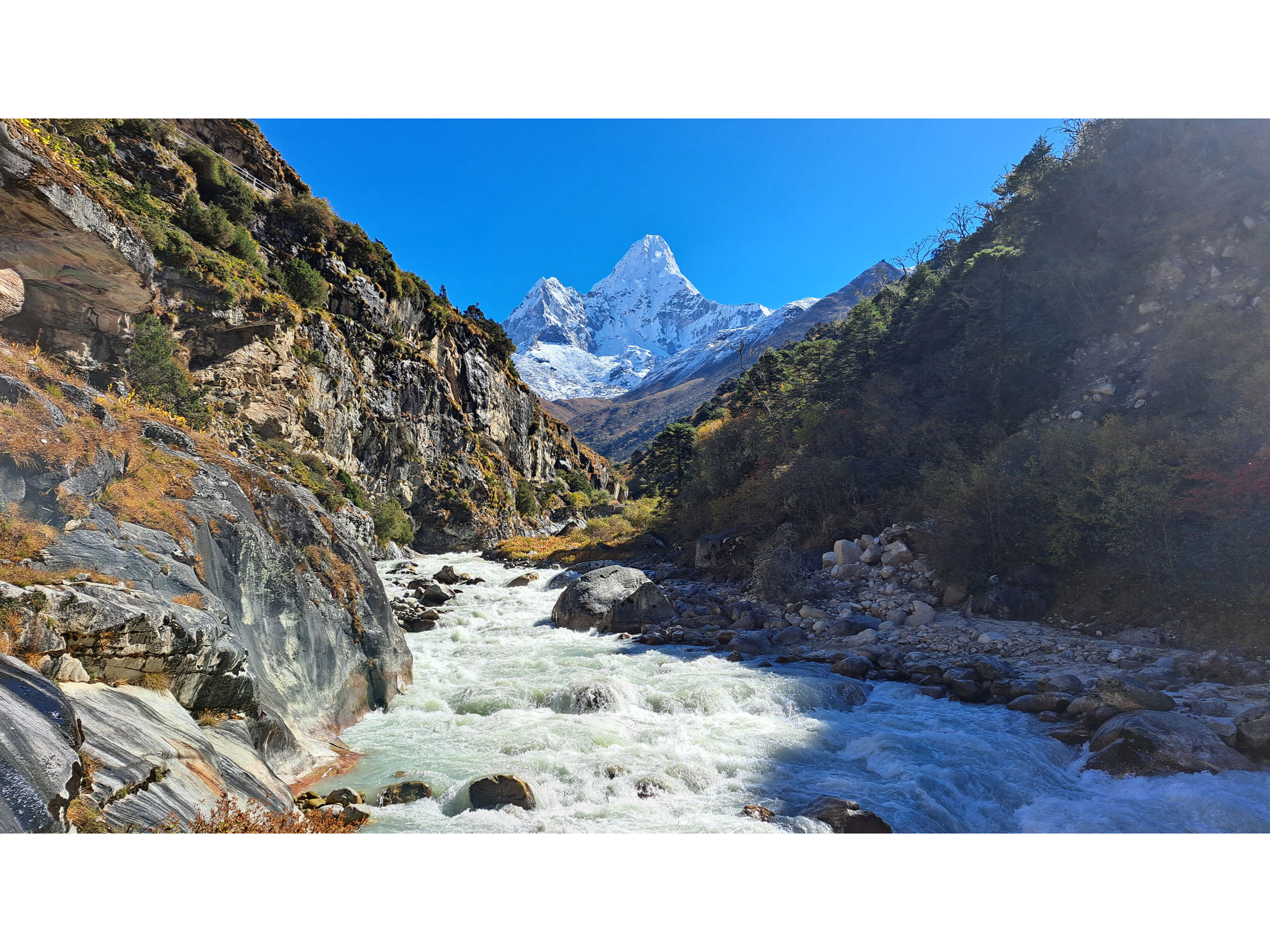
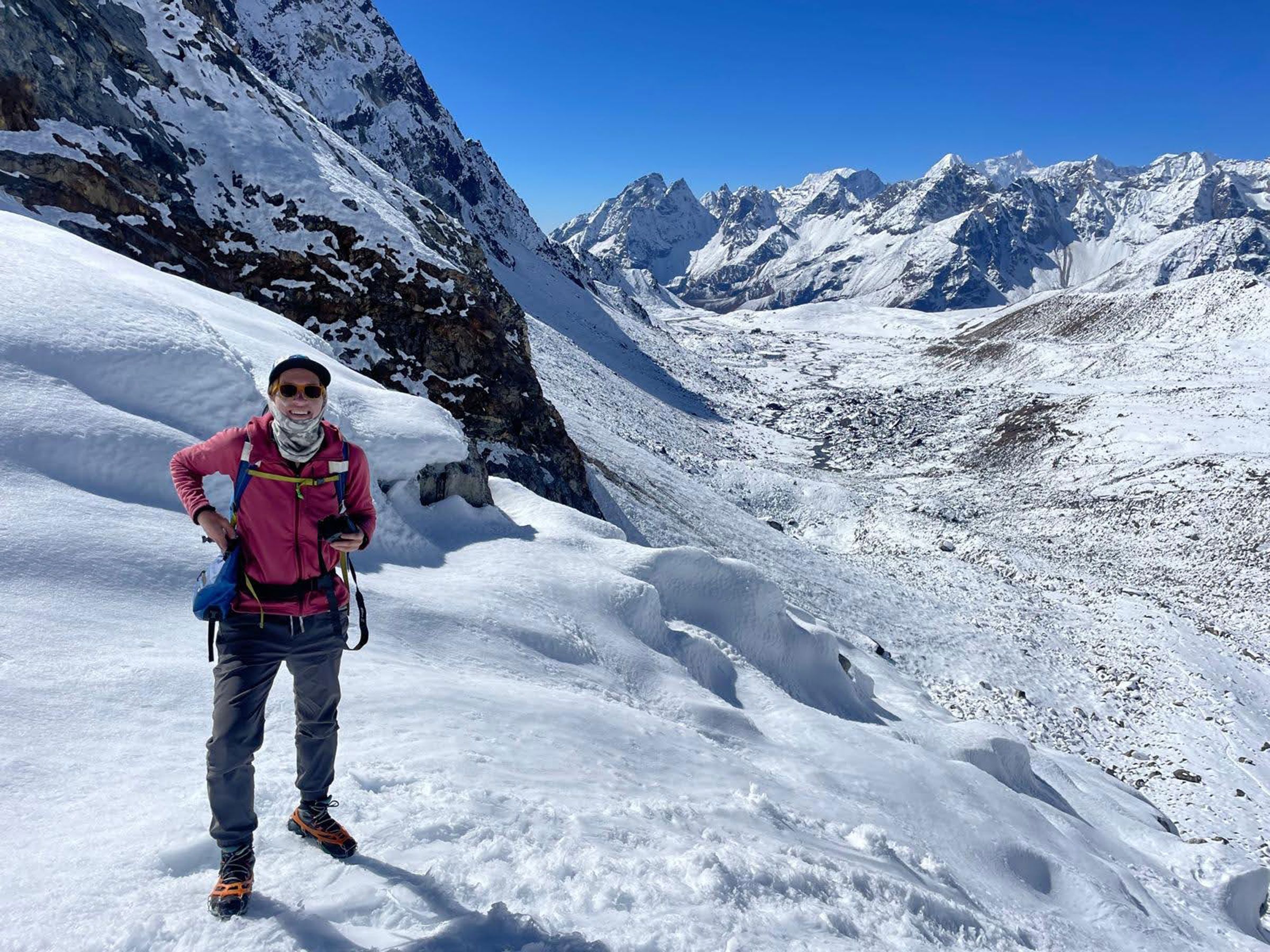
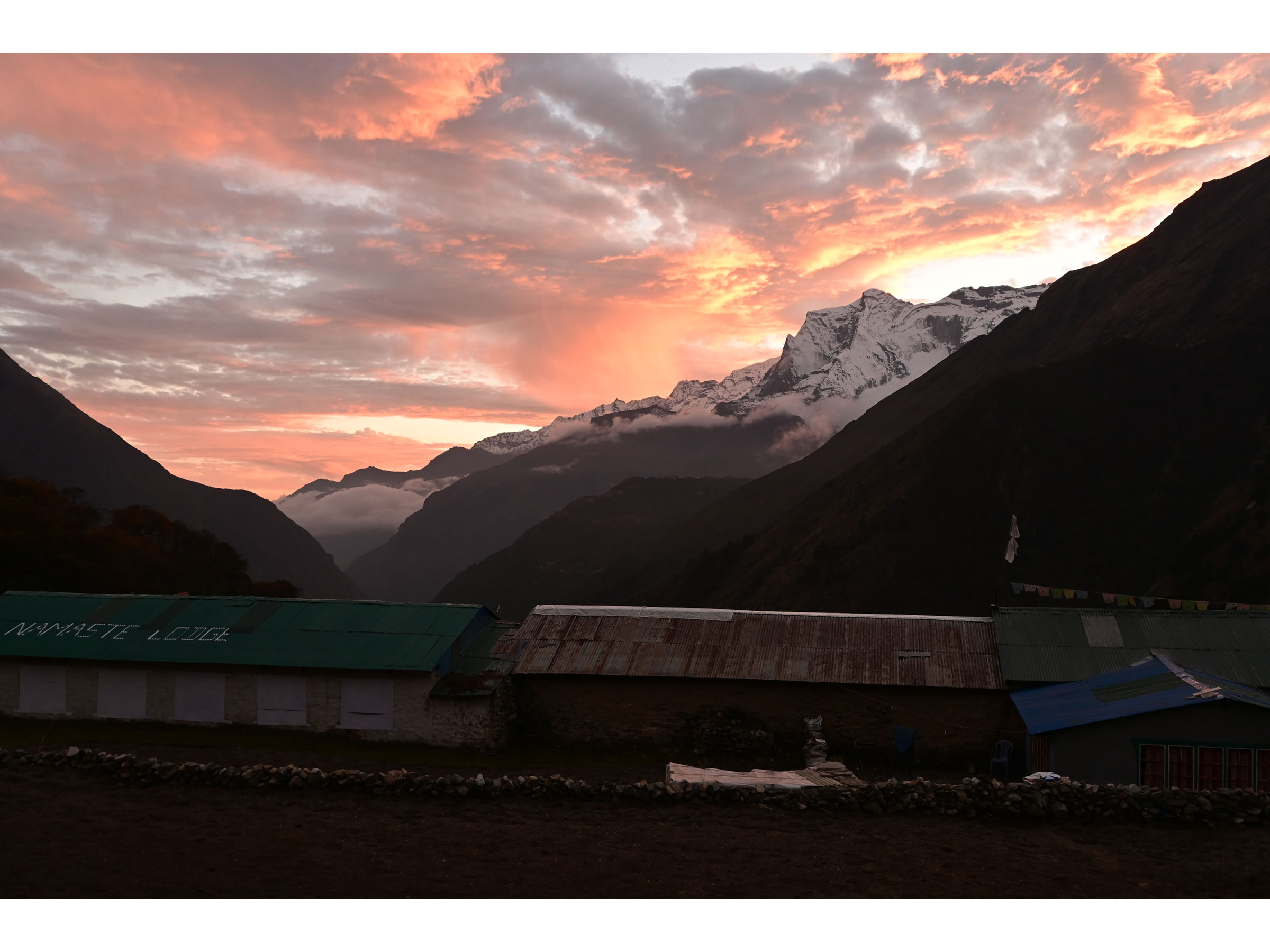
Last fall, when Cary aquatic biogeochemist Taylor Maavara was wrapping up a 16-day trek through the Himalayas, she “had a moment.” She explains, “I was sitting by a river, and I realized that 12-year-old Taylor would be so happy to see me doing science in the Himalayas. How lucky am I to be in this really cool place and do something meaningful while I’m here?”
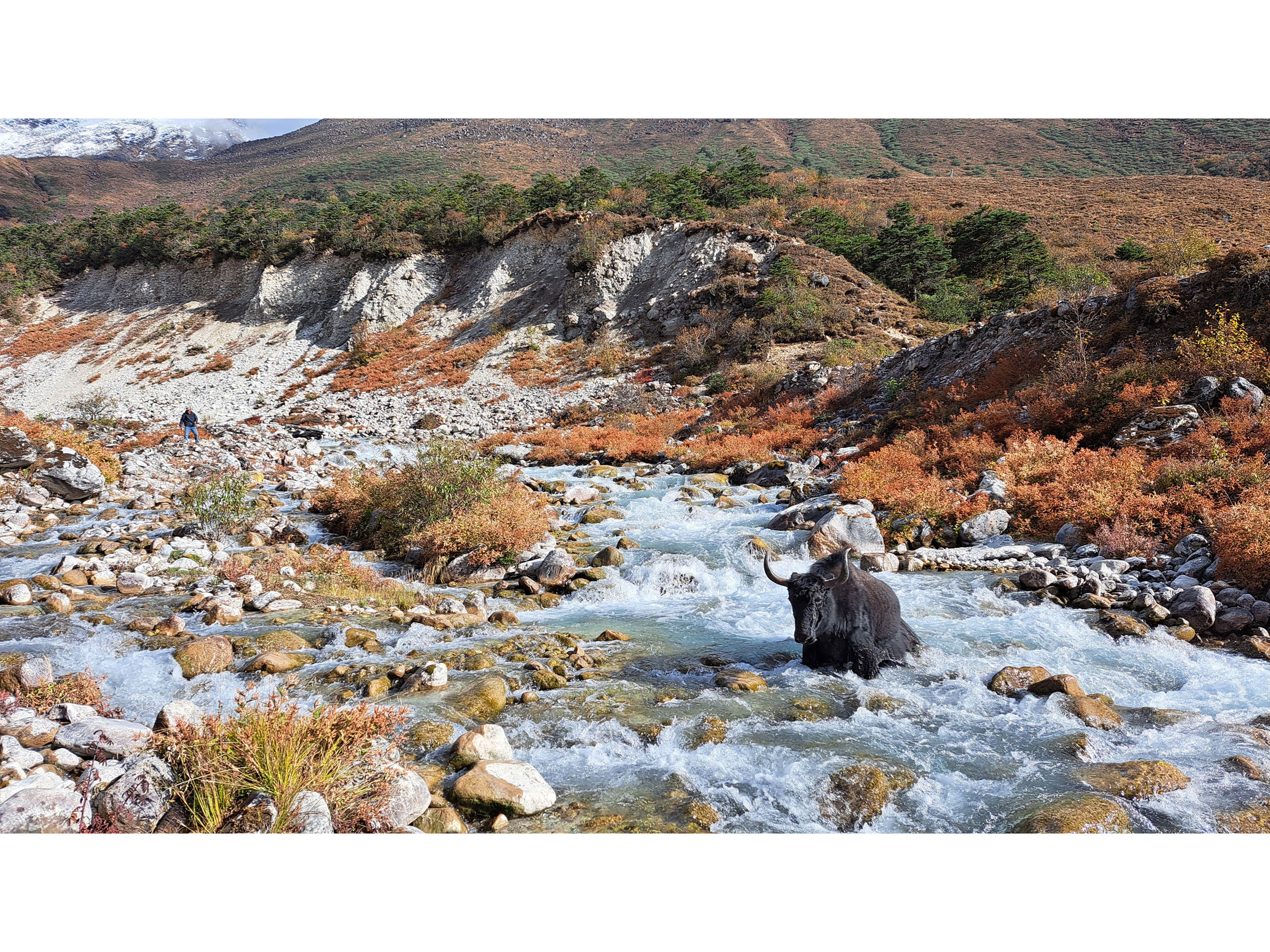
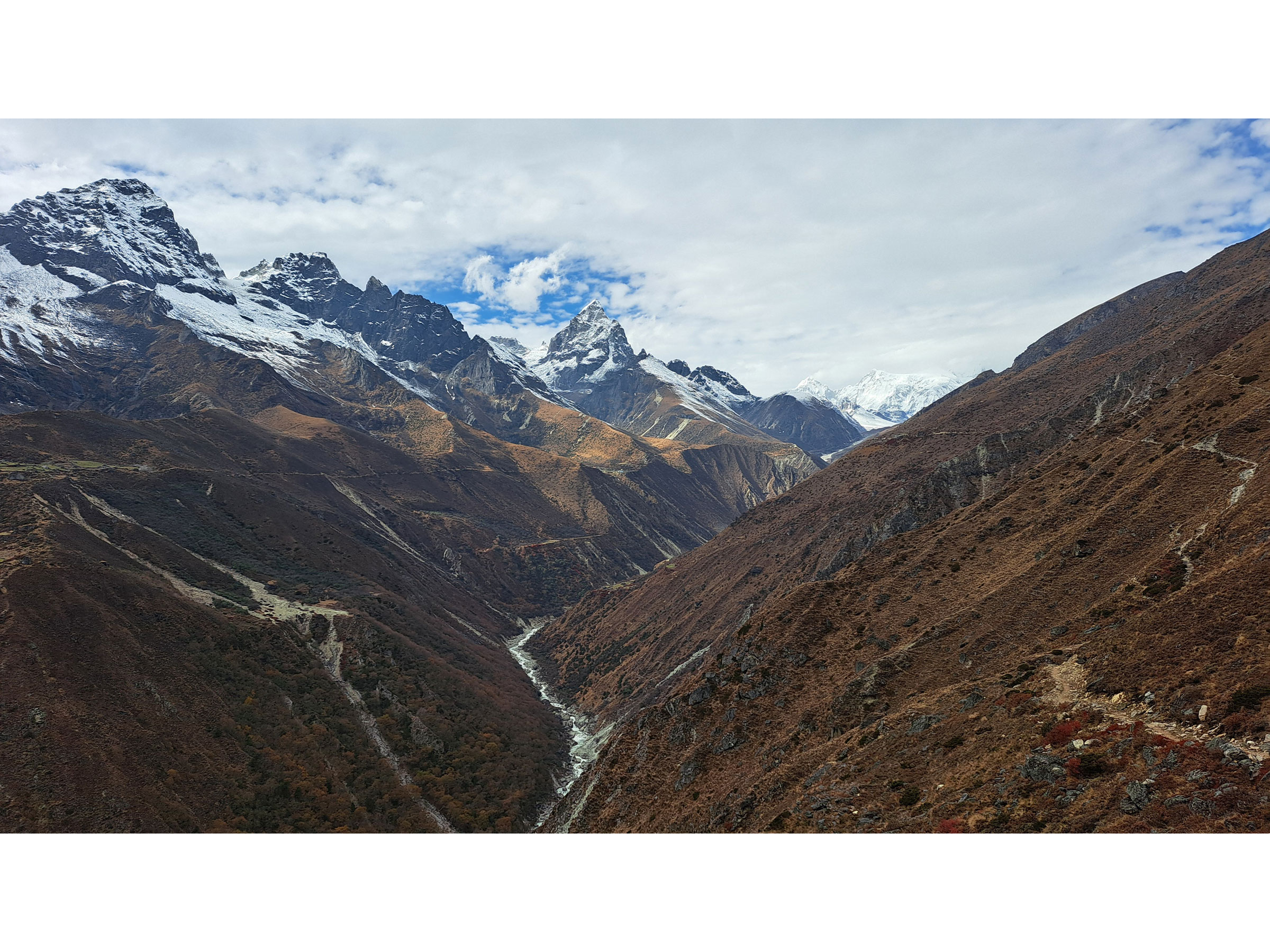
Maavara is part of the Hi-RISE project (“Himalayan glacier-fed Rivers and Streams”), led by the University of Leeds, that is among the first to investigate the ecology of rivers fed by melting Himalayan glaciers. “We don’t even have baseline knowledge of what these river ecosystems look like, let alone how they’re changing and the consequences for people and ecosystems downstream,” says Maavara.
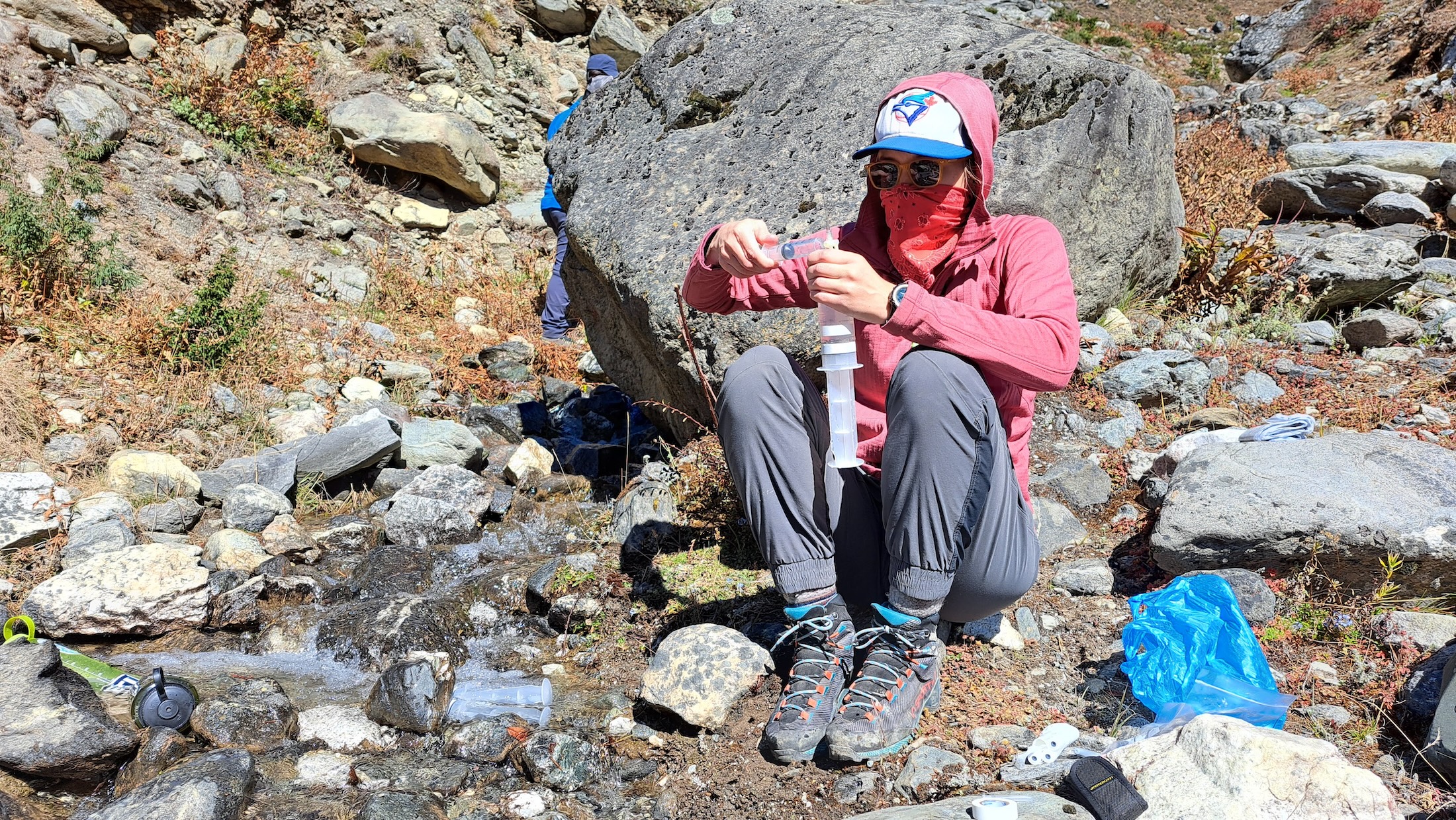
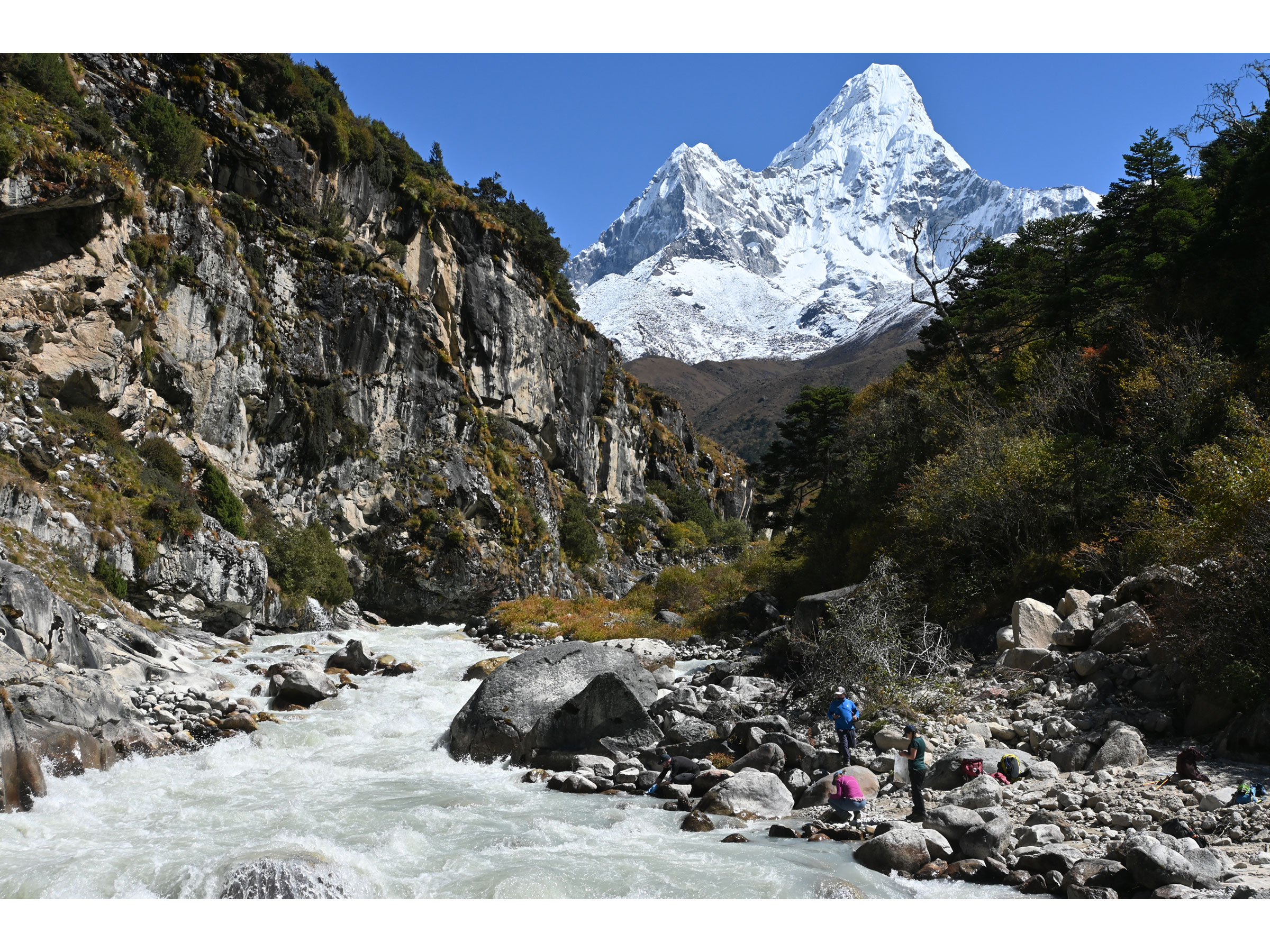
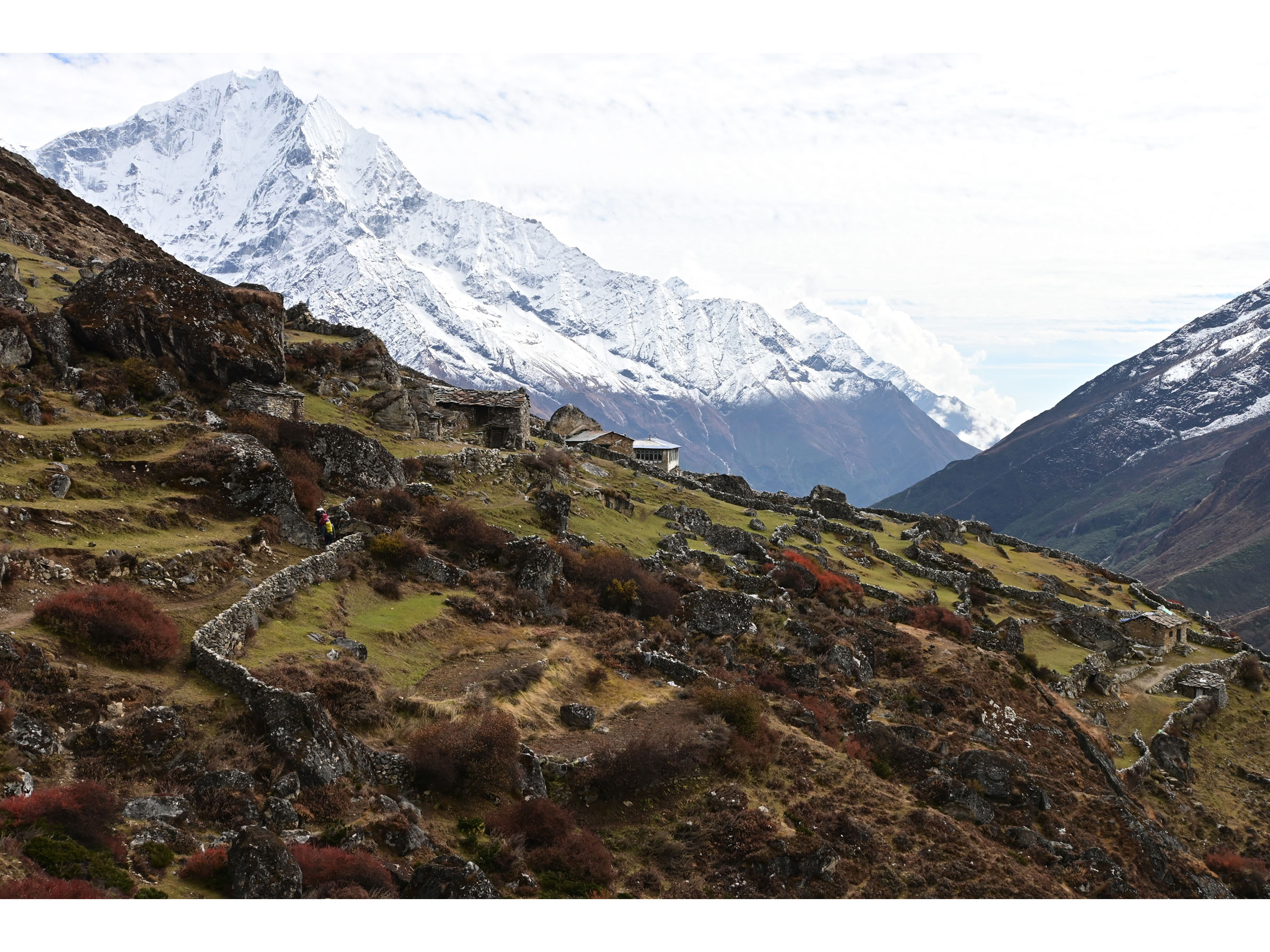
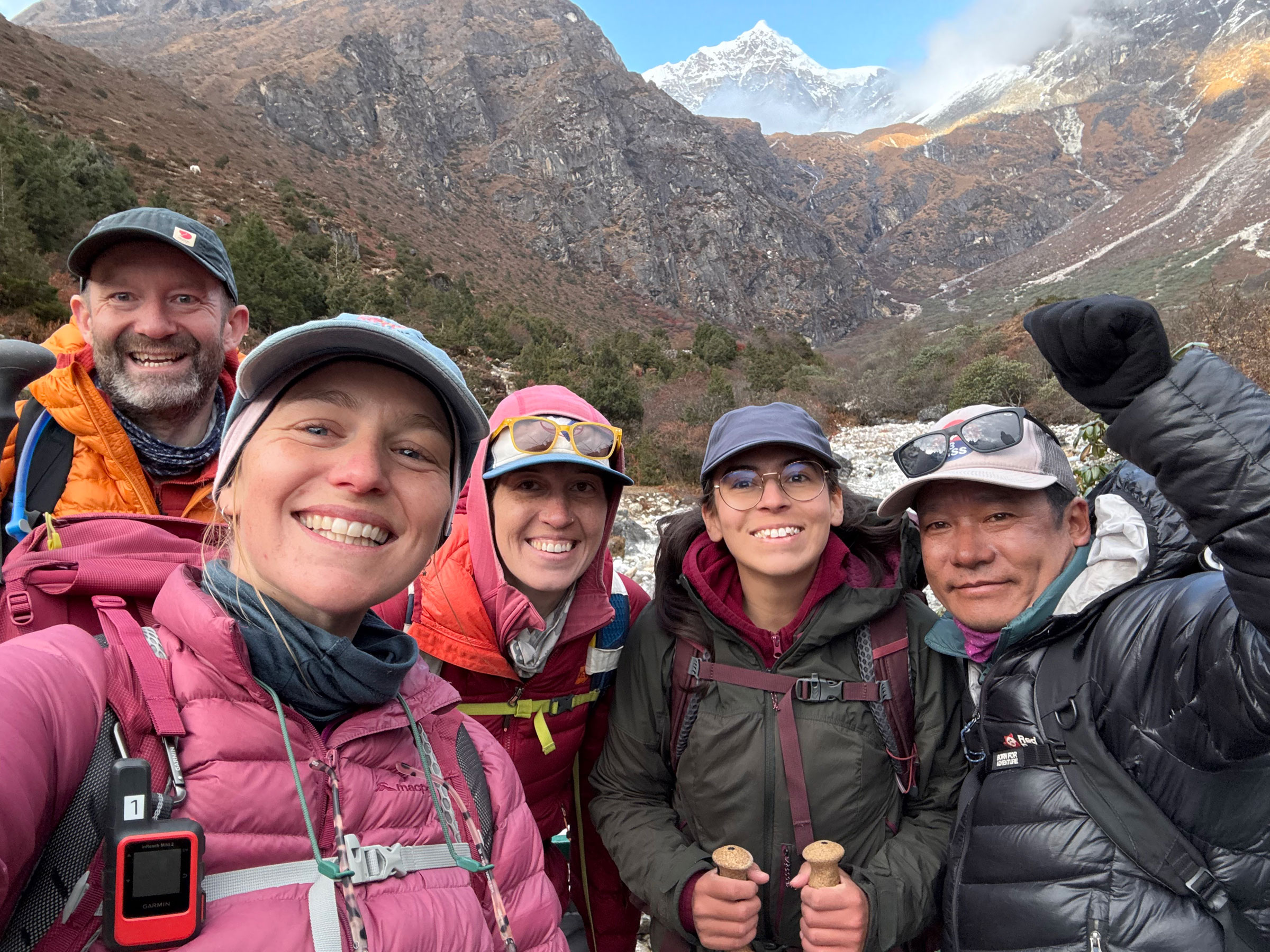
In October, she and three teammates hiked around Sagarmatha National Park, where Mount Everest can be found. While there, Maavara collected samples to study carbon and greenhouse gas dynamics in these glacier-fed streams. She is trying to understand whether they are emitting greenhouse gases, and if so, where is the gas coming from? Is it being made in the short distance between the glacier and the sampling location, or is it coming from under the glacier itself? How old is the carbon? Are the glaciers emitting ancient carbon that’s been locked away for thousands of years, or is it just fossil fuel emissions that deposited on the glacier and then got washed off and recycled?
One of the reasons Himalayan stream ecology is understudied is because it’s hard to work there. There’s the altitude, for one. “No one on our team got serious altitude sickness on this trip, thankfully, but you just kind of feel bad all the time at altitude,” says Maavara.
Then there are the logistical challenges, such as how to collect samples when you have to still walk with them for 16 days. “How do I keep these samples frozen, or keep these other samples from freezing?” Maavara muses. “Will my vacuum-sealed tubes leak or pop as we change elevation? One of the tests I want to run in April requires carrying many liters of water around, and putting my samples in glass bottles, and I would usually need to preserve them with a mercury-based poison that I absolutely can't fly with, so I’ve had to find an alternative method. We also have to fly back from the mountains to Kathmandu with all these glass tubes, and there is a risk that stuff will get smashed in transit.”
Though the science is challenging, trekking around Everest is not quite as rugged as one might imagine. There’s a lot of infrastructure set up for hikers, such as tea houses with beds and kitchens, so the team didn’t have to carry food or camping gear. There were few warm showers to be found, though, and no opportunity for laundry, “so we were all pretty stinky by the end of the trip,” says Maavara.
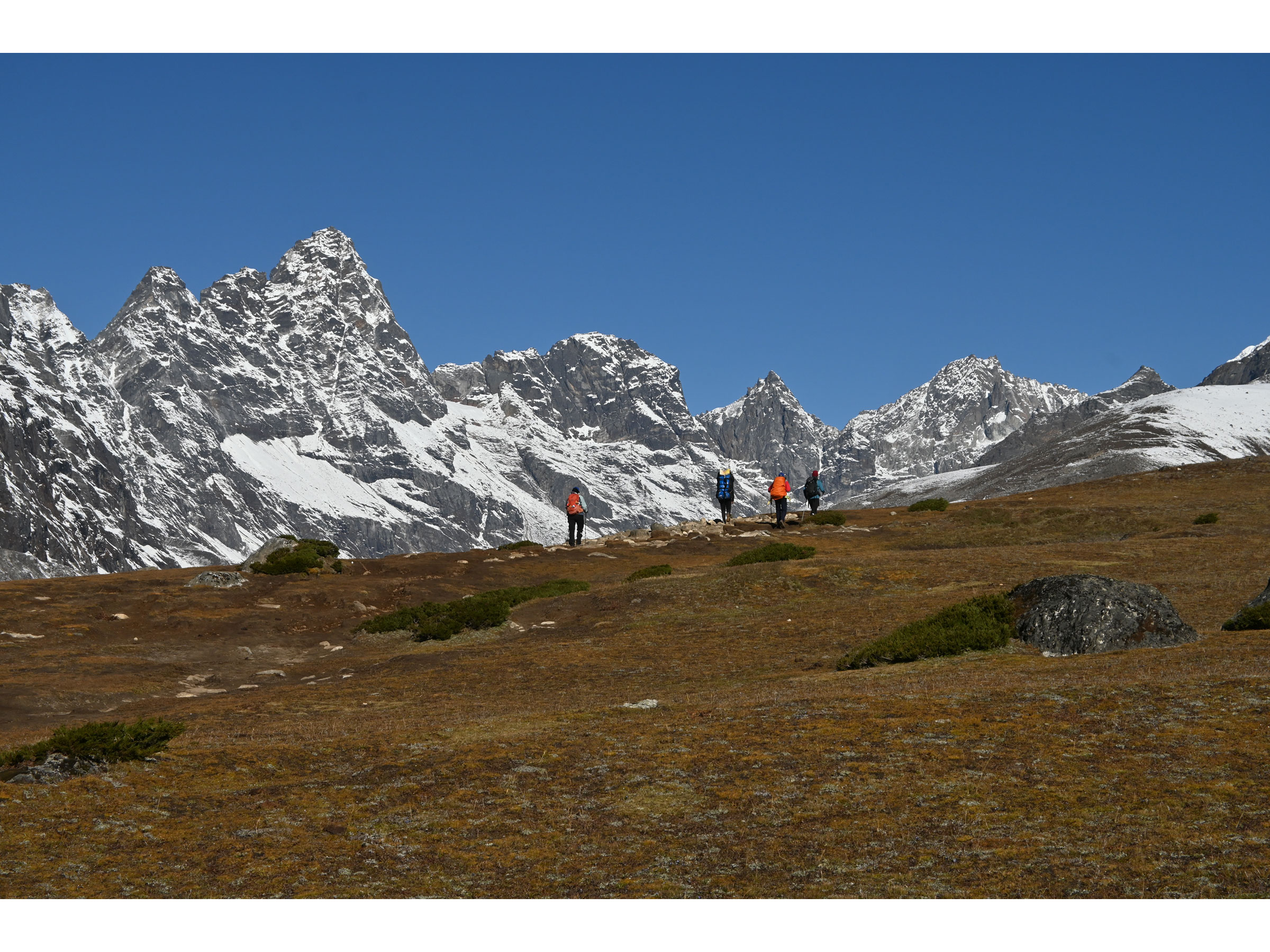
Porters would walk ahead with the bulk of the scientists’ gear, so that each day, the scientists only carried daypacks with a raincoat, a warm layer, water and snacks, and whatever scientific gear they needed that day. For Maavara, that meant syringes for gas sampling, filters to collect water quality data, “and a box full of glass tubes, which I stressed about breaking almost non stop.” A guide named Mahesh Magar would set the walking pace to make sure the scientists could get to the next tea house without burning themselves out.
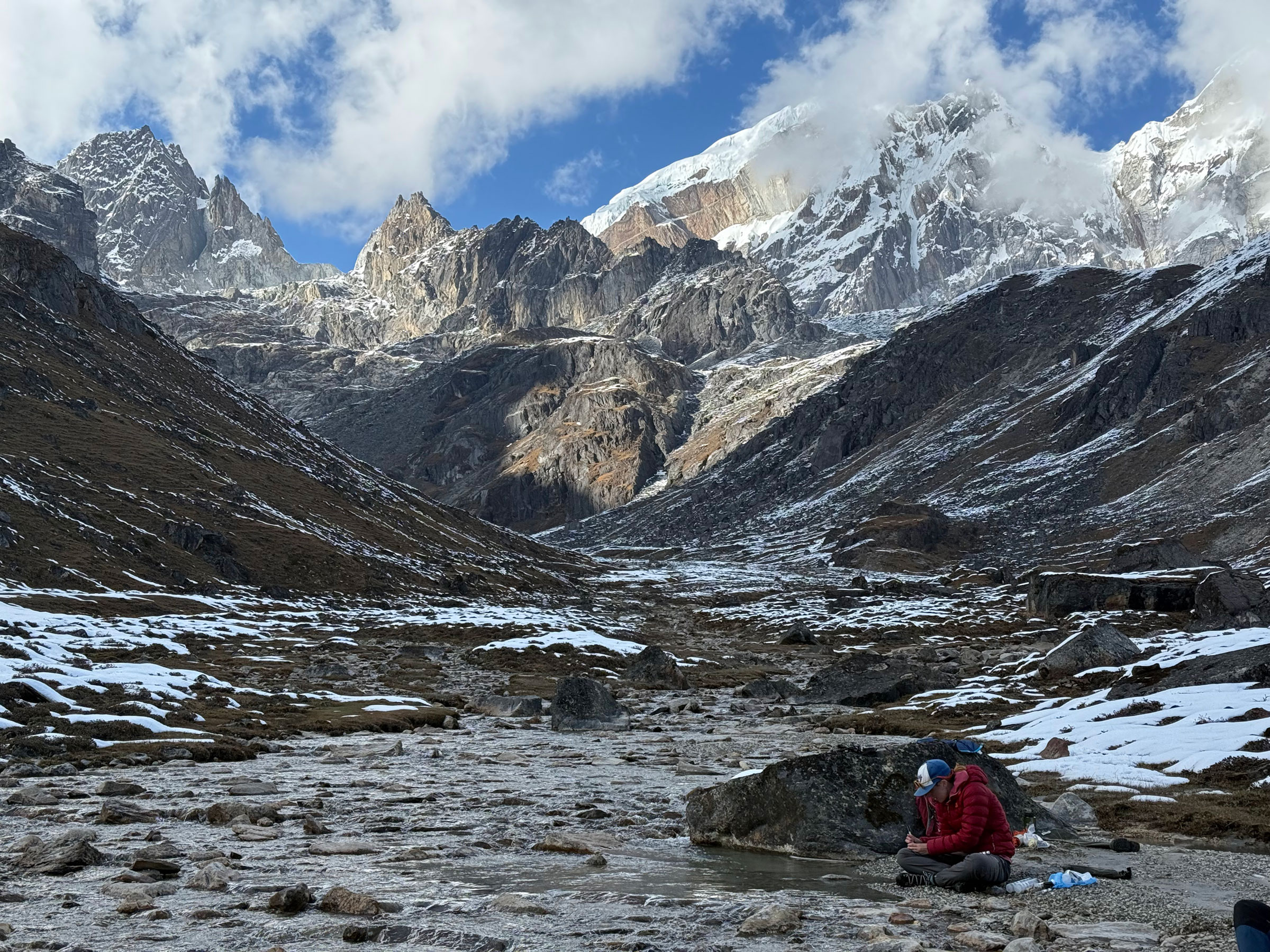
Although it got cold at night, daytime temperatures in the fall were quite comfortable. One day, they even got too hot. “I think I was close to heat exhaustion,” Maavara recalls, “which is surprising, because there was a lot of snow on the ground. So I think it was because we were basically walking through a solar collector, and I was wearing a black shirt. A few of us felt a bit sick by the end of that day.”
Despite the challenges, the expedition is already revealing intriguing results. They detected some unusual spikes in methane in five high-elevation sites around Everest’s glaciers; now they are trying to determine if the spikes might be caused by waste from tourists, or if perhaps there might be anoxic environments under glaciers that are synthesizing methane.
Another finding showed that dissolved organic and inorganic carbon are highest in concentration near the glaciers, and they decrease as you go downstream. “We see this sometimes in forested watersheds,” says Maavara, “but in this case, the higher you go up, the fewer trees there are, so we don’t know yet why we’re seeing this trend.”
Team members, including Maavara and Cary postdoc Max Glines, are going back to Sagarmatha in April to collect more samples, so that they can compare pre-monsoon and post-monsoon results. Maavara will also be taking samples in new sites around Manaslu and Annapurna — two more of the world’s highest peaks.
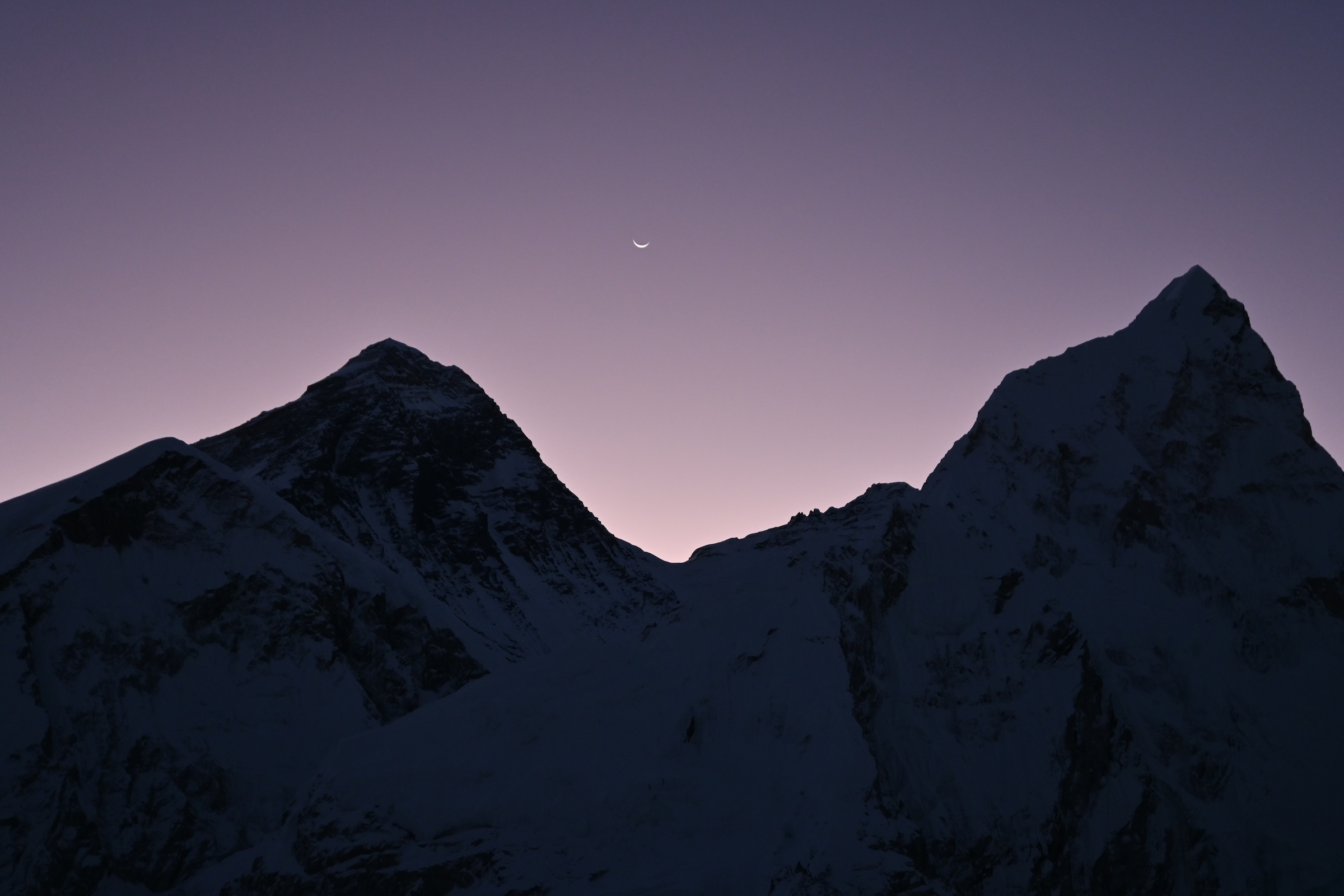
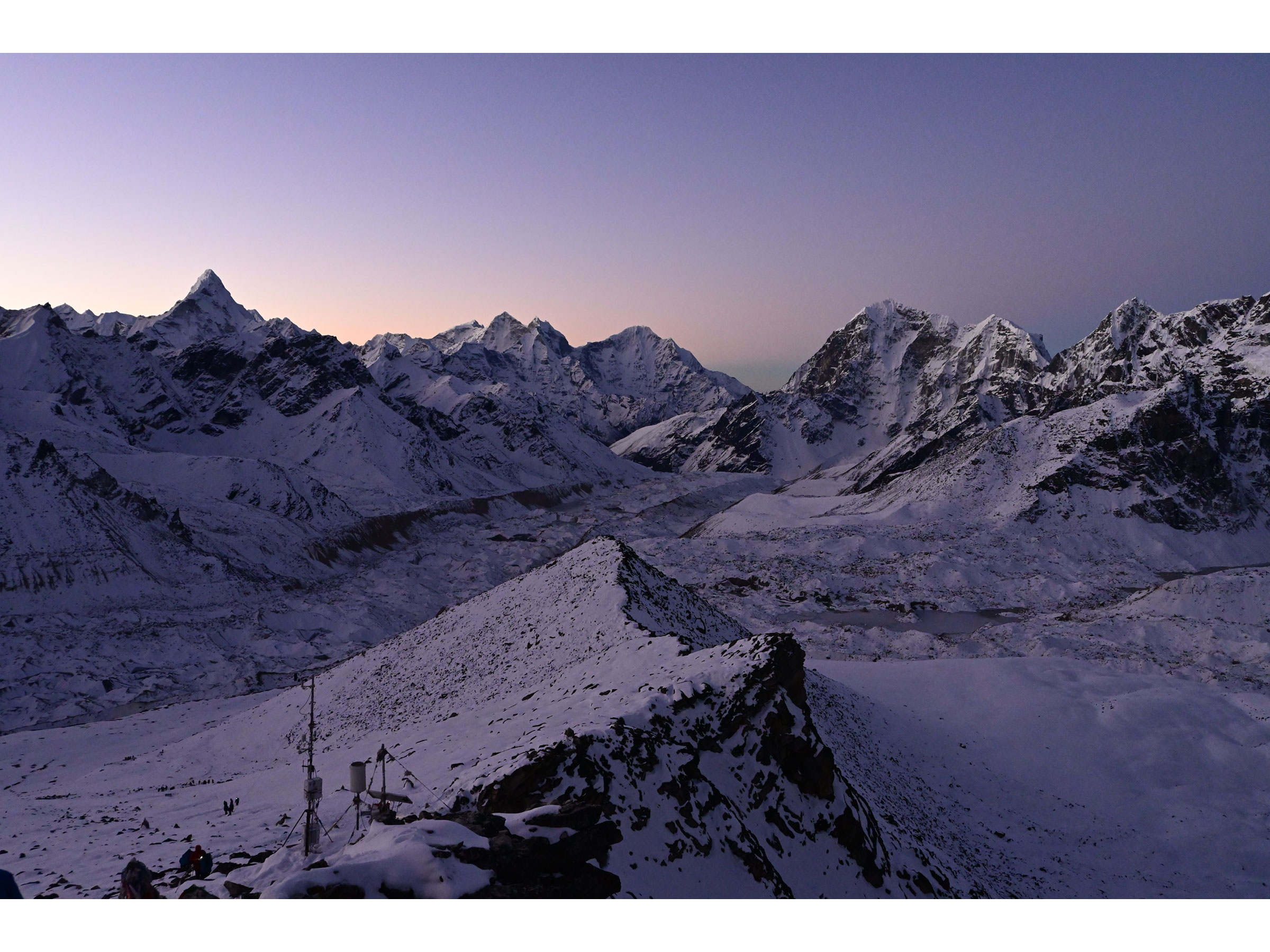
For Maavara, a highlight of the trip was a morning hike to watch the sunrise over Mount Everest. The team woke up at 3am on their day off to climb to a summit above Everest Base Camp.
“At first, Everest is kind of hidden behind this other peak called Nuptse, but it gets clearer and clearer as you go up, and you can see more of it,” says Maavara. “The sky was just starting to turn purple, and I looked over my shoulder and there was this perfect crescent moon rising from behind Everest. It was so beautiful I started to cry — which was bad, because there wasn’t enough air. So I’m wheezing and trying to keep walking while I’m having this emotional moment. But we made it to the top, right to this little rocky pinnacle, and we were almost the first ones there. I got my camera out and started taking pictures, and I just kept thinking, ‘This is incredible. This is the most beautiful thing I've ever seen.’”
Click through the slideshow below to see more photos from this incredible trip.