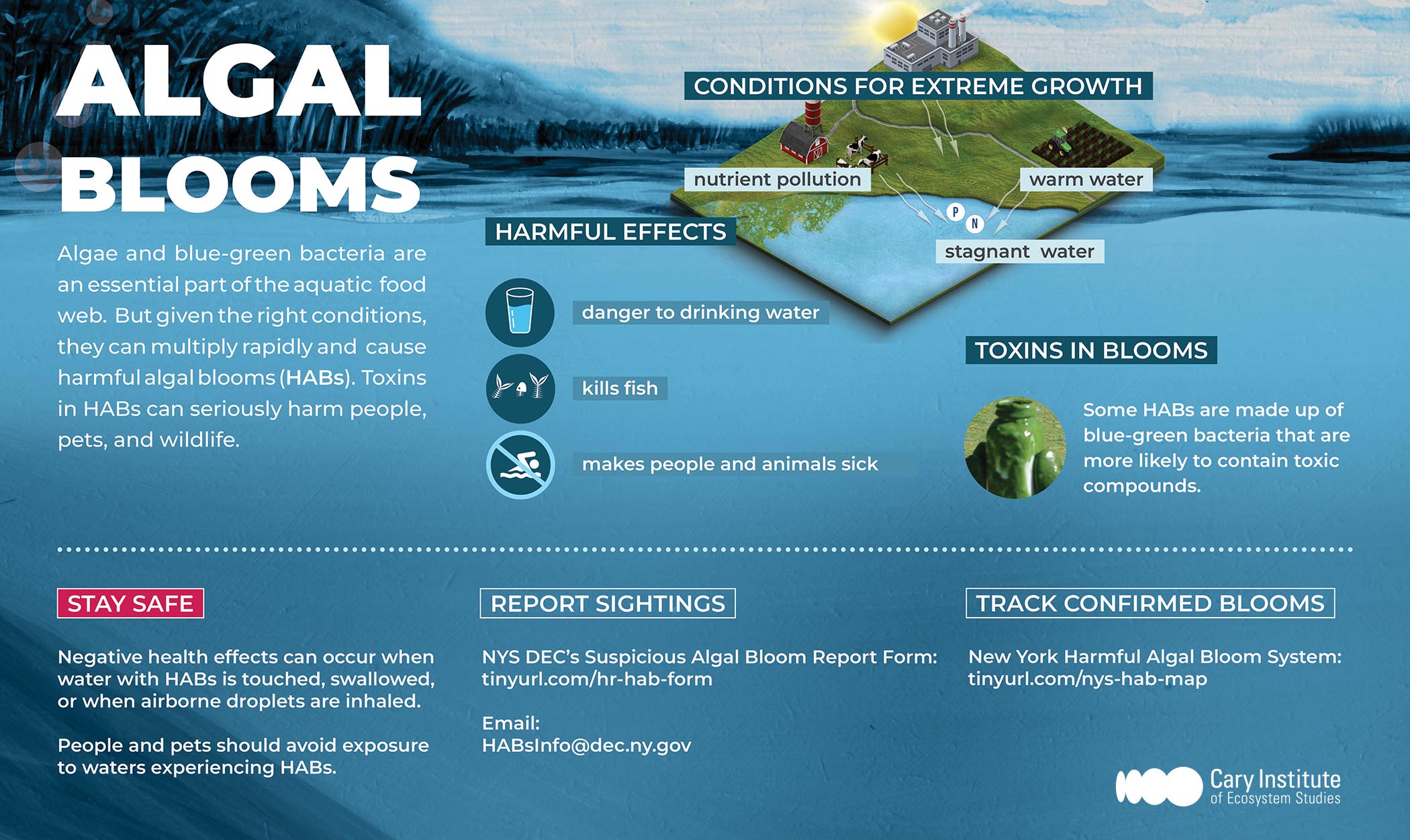
Speakers from the NYS Department of Environmental Conservation (DEC), the NYS Department of Health (DOH), Cary Institute, and Riverkeeper discuss harmful algal blooms, with a special focus on blooms in flowing waters like the Hudson River.
Last summer, Cary researchers encountered an unprecedented harmful algal bloom in the Hudson River while conducting research on the river's food web. It was the largest bloom observed during nearly 40 years of Cary’s long-term monitoring. The bloom was identified as Microcystis, a type of cyanobacteria that can produce toxins harmful to people, pets, and wildlife. Cary scientists are working with Riverkeeper to develop new monitoring methods and improve our understanding of how to predict and manage future blooms.
Presenters provide an overview of harmful algal blooms, including what they look like in flowing waterways, the potential risks posed by toxin-producing blooms, and current research underway to improve their detection and management. Participants will also learn how to report a bloom in any body of water and ways to support healthy aquatic ecosystems.
Speakers
Brian Duffy, Section Chief of the Monitoring and Assessment Section, Division of Water, NYS DEC
Gena Gallinger, Director of Outreach and Education, NYS DOH
Chris Solomon, Aquatic Ecologist, Cary Institute of Ecosystem Studies
Dan Shapley, Senior Director of Advocacy, Policy and Planning, Riverkeeper