


The Amazon rainforest is famous for storing massive amounts of carbon in its trees and soils, helping regulate the global climate. Yet a paper published today in New Phytologist shows that one of South America’s largest carbon-storing ecosystems exists in an often-overlooked grassy savanna: the Cerrado in Brazil.
The study was led by Larissa Verona, a technician working with senior scientist Amy Zanne at Cary Institute of Ecosystem Studies and a former graduate student at Universidade Estadual de Campinas in Brazil, where she carried out the work. The study is the first in-depth assessment of carbon stocks in the Cerrado’s groundwater-fed wetlands, known locally as campos úmidos (wet grasslands) and veredas. Measurements indicate that the peaty soils of these wetlands store about 1,200 metric tons of carbon per hectare.
“This value is about six times greater than the average carbon density of biomass in the Amazon rainforest,” said Verona.
Based on the team’s mapping of potential wetland distribution, they estimate that these areas could be storing the equivalent of about 20% of the carbon in the Amazon vegetation. However, much more work at additional sites is necessary to test this estimate.
Verona’s work was supported by a fellowship from the São Paulo Research Foundation (FAPESP) and supervised by senior author Rafael Oliveira, an ecologist at Universidade Estadual de Campinas.
A vital ecosystem
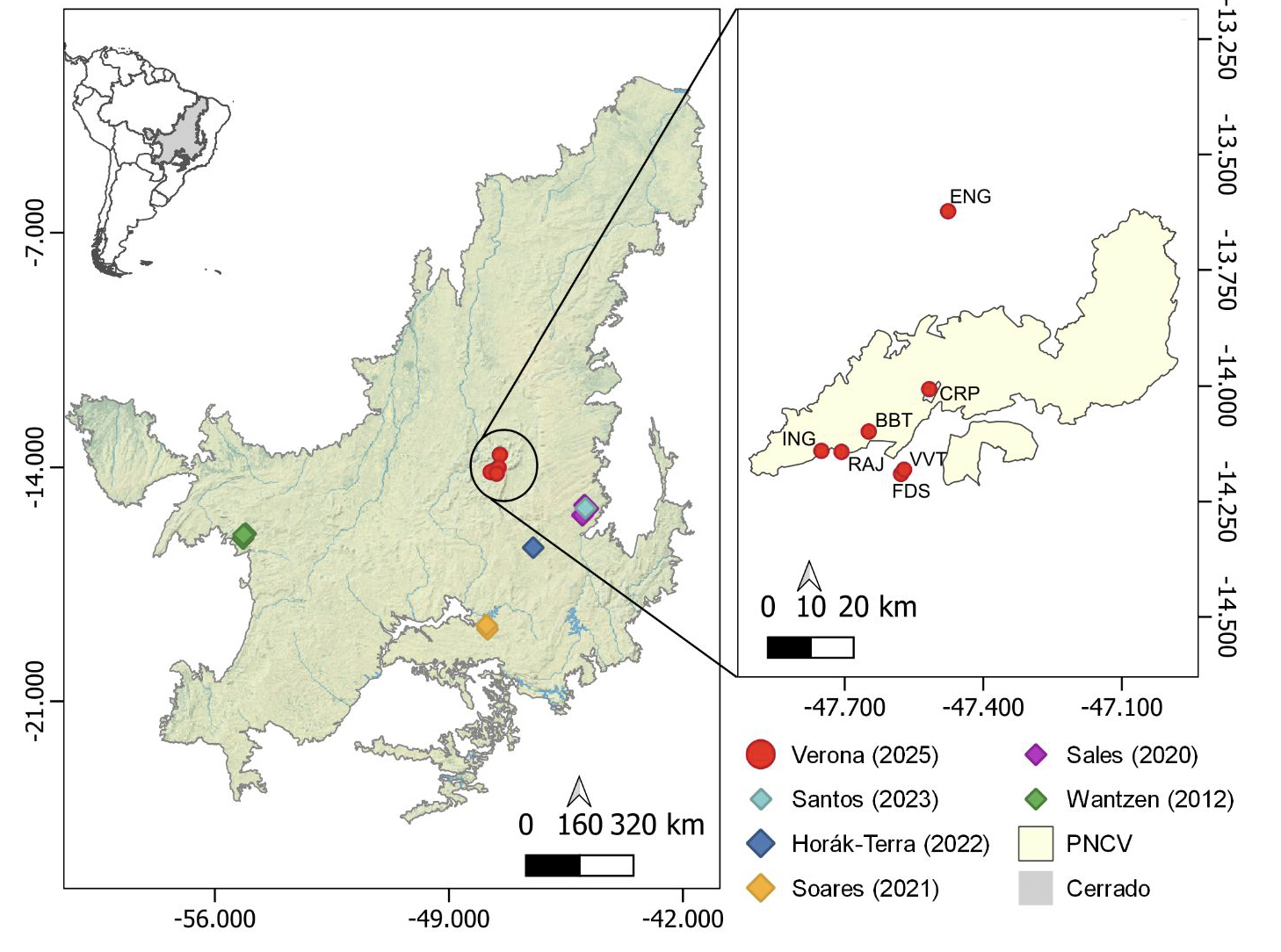
The Cerrado is the second largest biome in South America, occupying 26% of Brazil. The most biodiverse savanna in the world, it is home to parrots, toucans, pumas, tapirs, maned wolves, giant anteaters, and many other animals, as well as more than 4,000 native plant species.
“The Cerrado also has the headwaters of approximately two-thirds of Brazil’s major waterways, including the Amazon,” said Zanne. “It’s the source of a lot of water for the entire country and broader region.”
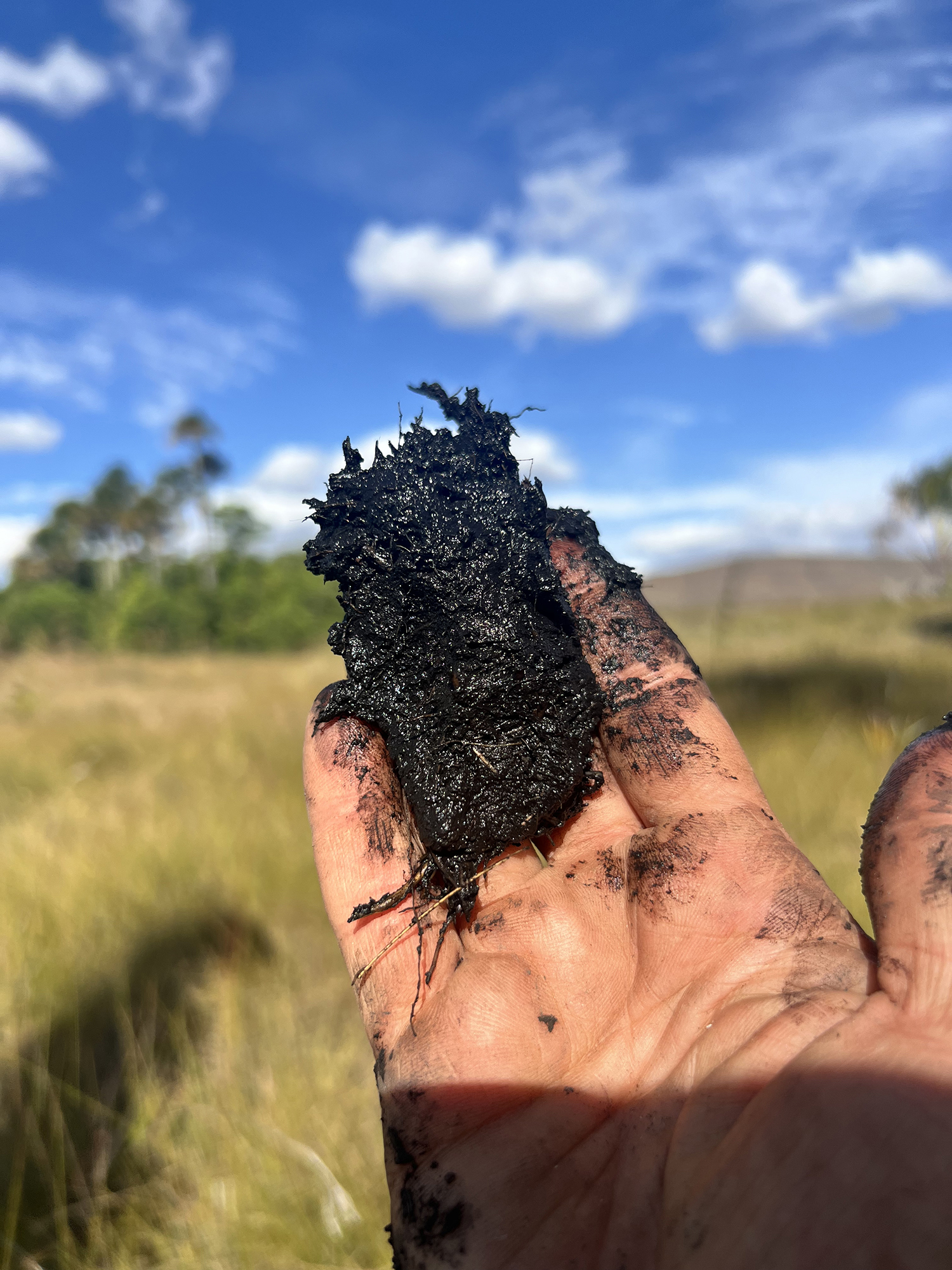
The water-logged peaty soils of these headwaters are rich in carbon from partially decomposed plants and other organic matter.
“Wet conditions create a lack of oxygen, which slows down decomposition,” Zanne explained. “As a result, organic matter accumulates over time, enabling these wetlands to store large amounts of carbon in their soils, potentially for thousands of years at a time.”
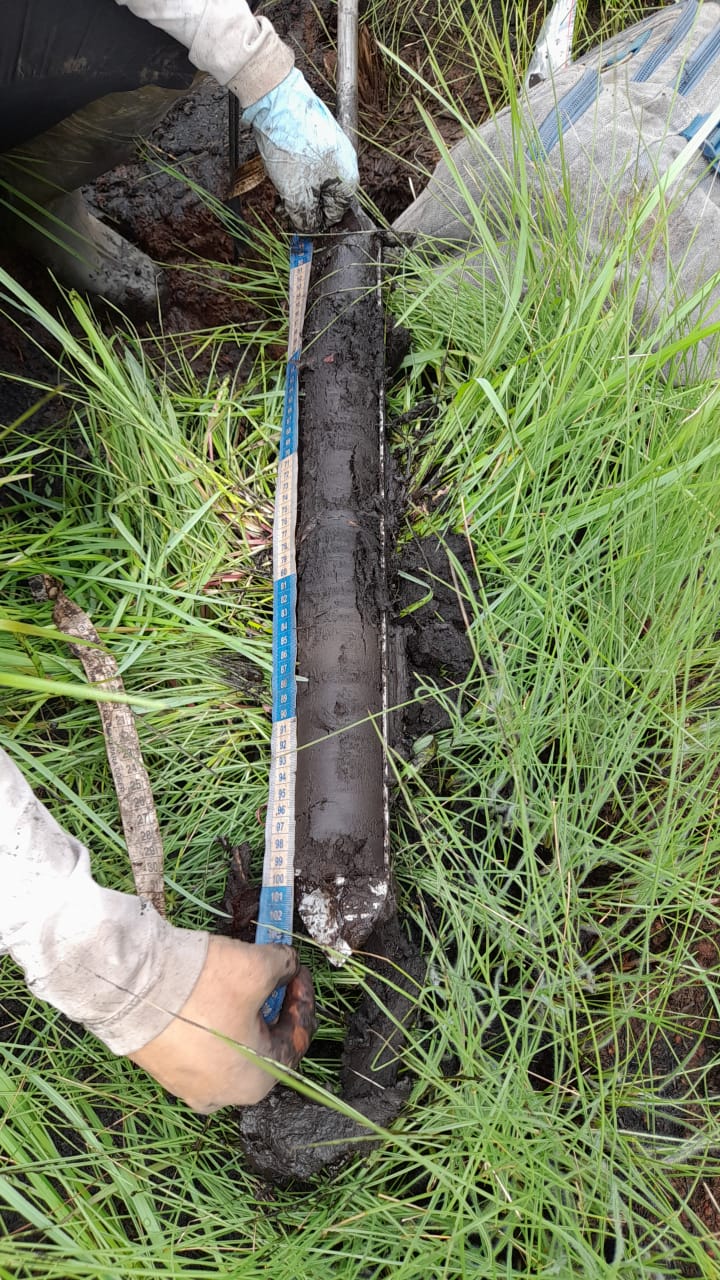
Despite their importance as carbon sinks, Cerrado wetlands and their carbon stocks remain poorly understood. The new study is the first to use deep soil profiles across multiple sites to quantify how much carbon the wetlands are storing.
Exceptionally high carbon density
To measure how much carbon is stored in the wetlands, the researchers extracted soil cores as deep as four meters. The work was physically difficult, and Verona often came back from her field work covered in mud. In the lab, each layer of the soil core was tested to determine its carbon density. Their finding of an average density of 1,200 metric tons of carbon per hectare is considered exceptionally high, although there are other peatlands, including in the Congo basin, where carbon density exceeds 2,000 metric tons per hectare.
Mapping the wetlands
Veredas and campos úmidos are spread out in relatively small patches throughout the Cerrado, making it difficult to estimate how much carbon they could be storing at a regional scale.
“Because these wetlands are naturally fragmented, Larissa had to do lots of modeling to try to predict where they might occur,” said Zanne.
Remote sensing data combined with machine learning suggested that the wetlands may cover 16.7 million hectares, occupying an area at least six times greater than previously thought. This area represents approximately 8% of the Cerrado and 2% of Brazil. The team is continuing to refine their mapping and estimates.
Very old carbon
Team members at the Max Planck Institute in Germany used radiocarbon dating to determine how long the carbon had been accumulating in the veredas and campos úmidos. The average age of the carbon was 11,185 years old, but some of it had been sitting in the wetlands for more than 20,000 years.
“This carbon accumulated over a long time period, and if it gets lost, we can’t accumulate it again for a very long time, the way we can replant a forest,” said Verona.
Zanne adds, “The Cerrado’s vast store of carbon isn't included in our carbon budgets, because until recently, we didn’t know it was there. If these carbon stocks are disturbed — such as through agricultural expansion, wetland draining, and drying due to climate change — the stored carbon could convert into climate-warming greenhouse gas emissions. This is one of the many reasons why it’s so important to protect this ecosystem. However, current strategies to protect carbon-rich ecosystems tend to focus almost entirely on forests, and they overlook ecosystems like this.”
Dry conditions are bad for carbon storage
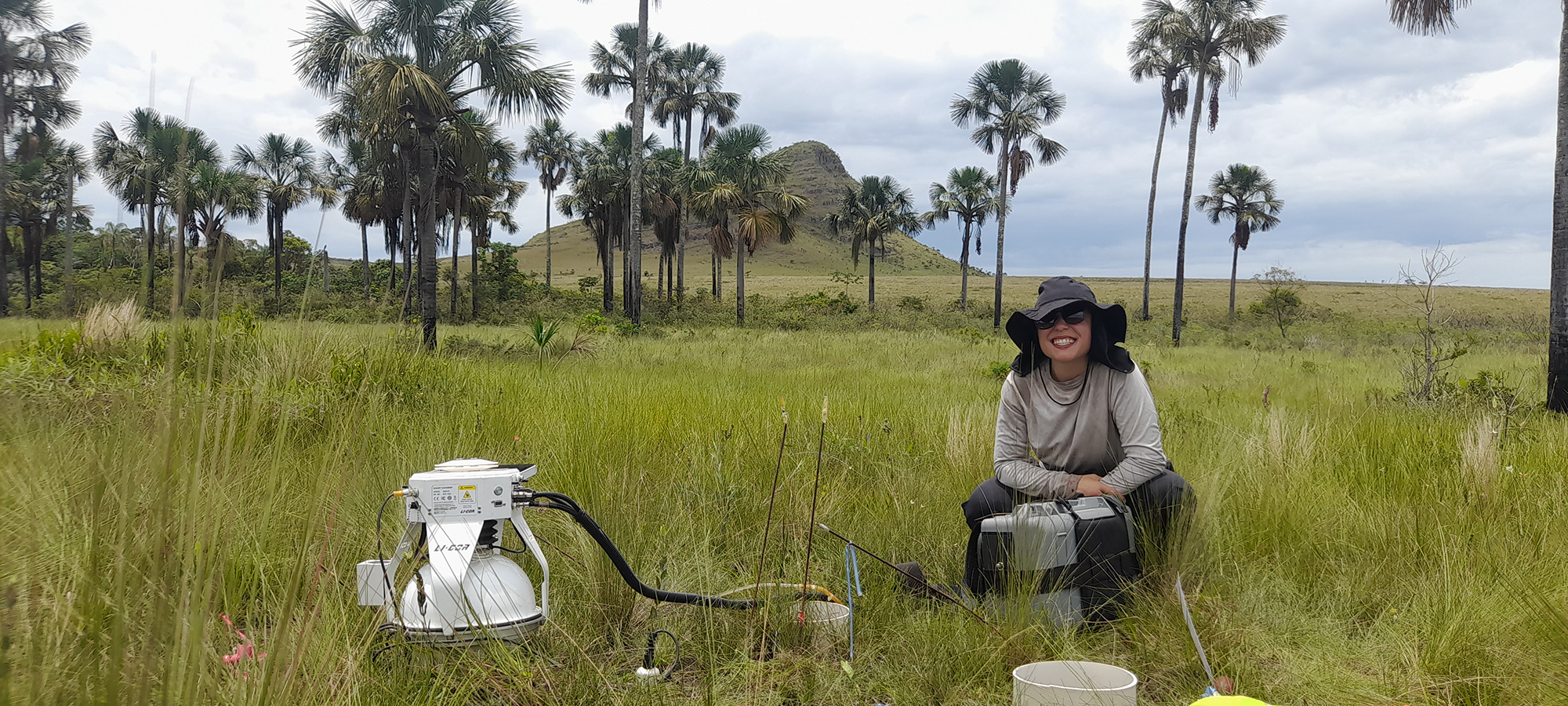
Verona measured greenhouse gas emissions during the Cerrado’s wet, dry, and transitional seasons. Taking these measurements involved lugging a sensitive instrument called a LI-COR Trace Gas Analyzer through the mud and hooking it up to PVC collars in the ground to measure the carbon dioxide and methane coming out of the soil — all while trying to keep the machine dry.
“This was really challenging, because it’s easy to fall when you get stuck in the mud, or you step in a hole,” said Verona. “I fall over all the time in the field, but as long as I protect the instrument, I don’t care. It’s like my baby.”
Because the majority of the vegetation is grasses, which break down more easily than woody plants, the carbon stored in the wetlands can quickly decompose and turn into carbon emissions when the soils dry out.
The LI-COR measurements showed that about 70% of the wetlands’ annual emissions occurred during the hot, dry season. As the Cerrado becomes hotter and drier under climate change, more of the soil carbon is expected to break down, increasing greenhouse gas emissions.
An ecosystem under threat
In addition to the hotter and drier conditions that boost emissions, climate change is increasing the risk of fires in the Cerrado. Fires can quickly release carbon that took millennia to build up in the soils, and clear the way for invasive plants to colonize the Cerrado wetlands. Changes in land use pose another major threat.
“We call the Cerrado a sacrifice biome, because Brazil wants to protect the Amazon,” Verona explained, “but we also want to maintain agriculture. So agribusinesses are converting the Cerrado for commodity crop production, draining its wetlands, or taking its water for irrigation. And if we are removing the water from the wetlands, we expose these soils to more air causing greater breakdown and release of carbon.”
“As we lose water in the Cerrado,” Zanne added, “we also put water supplies at risk across the country and broader region, including the Amazon. So, sacrificing the Cerrado for the Amazon actually puts the Amazon at risk, too.”
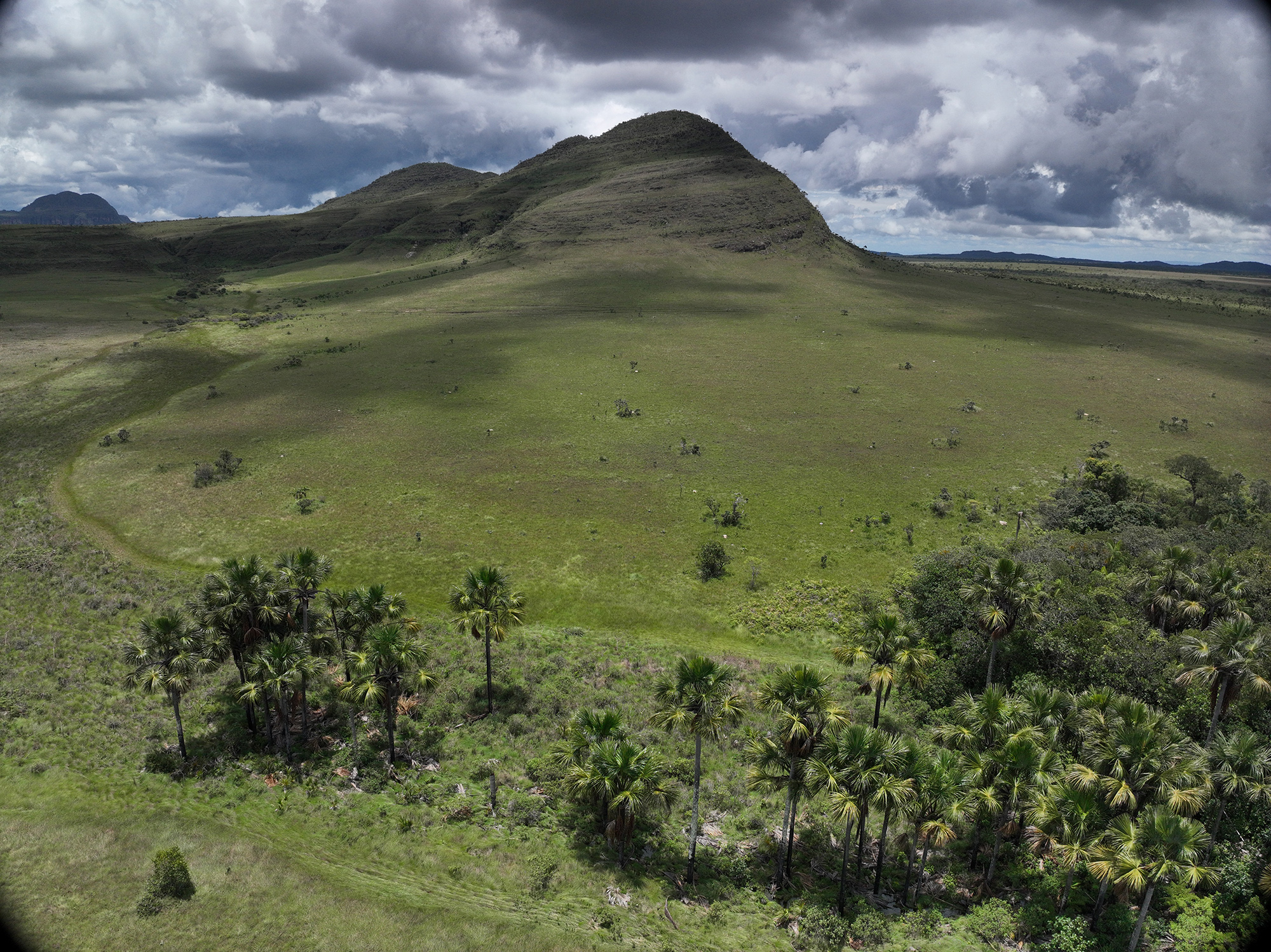
The authors think that expanded protections for wetlands and better education around the importance of groundwater-fed wetlands could help to protect these important ecosystems. Brazilian law already protects groundwater-fed wetlands, but, in some regions, as much as 50% of these wetlands have been degraded already. Improving recognition, mapping, and understanding of these ecosystems could strengthen their protection.
The authors hope that the new paper and their continuing efforts to map and understand wetlands in the Cerrado will underscore the urgency of conserving the Cerrado as a nature-based climate solution, and to safeguard water supply and biodiversity.
“When we talk about carbon in Brazil, we talk about forests,” said Verona. “But the Cerrado is also important for its large and long-term carbon stocks, and we need to fight for it, too.”
Authors
Larissa S Verona - Universidade Estadual de Campinas, Cary Institute of Ecosystem Studies
Amy E Zanne - Cary Institute of Ecosystem Studies
Susan Trumbore - Max Planck Institute for Biogeochemistry
Paulo N. Bernardino - Cary Institute of Ecosystem Studies, Universidade Estadual de Campinas
Guilherme M Alencar - Universidade Estadual de Campinas
Thalia Andreuccetti - Universidade Estadual de Campinas
David Herrera - Max Planck Institute for Biogeochemistry, Yale School of the Environment, Yale Institute for Biospheric Studies
João C F Cardoso - Universidade Federal de Minas Gerais
Demetrius Lira-Martins - Universidade Estadual de Campinas
Guilherme G Mazzochini - Universidade Federal do Rio de Janeiro
Natashi Pilon - Universidade Estadual de Campinas
Rafael S Oliveira - Universidade Estadual de Campinas
Funding
Coordination for the Improvement of Higher Education Personnel (CAPES), São Paulo Research Foundation (FAPESP-NERC grant 2019/07773-1 and FAPESP 2022/13757-1), and Minas Gerais State Research Support Foundation (FAPEMIG - RED-00039-23 and APQ-03249-22). This research was also funded by the US National Science Foundation (DEB-2507959 and DEB-2341406).
About
Cary Institute of Ecosystem Studies is an independent nonprofit center for environmental research. Since 1983, our scientists have been investigating the complex interactions that govern the natural world and the impacts of climate change on these systems. Our findings lead to more effective resource management, policy actions, and environmental literacy. Staff are global experts in the ecology of: forests, freshwater, soil, cities, and disease.
New Phytologist is a leading international journal focusing on high quality, original research across the broad spectrum of plant sciences, from intracellular processes through to global environmental change. The journal is owned by the New Phytologist Foundation, a not-for-profit organization dedicated to the promotion of plant science.


